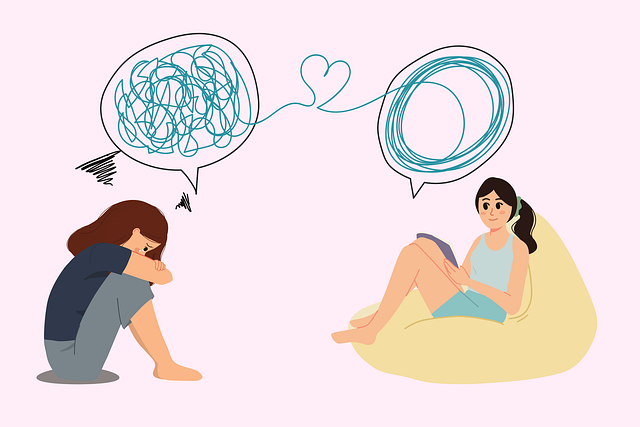
How Anxiety Can Limit Your Life Choices

by Nathan Chua

Anxiety is probably one of the most common complaints that people come to therapy for, which makes me wonder why this has not been a subject that I discuss more often.  I think a lot of my own anger issues stem from a deeply held anxiety about an assortment of issues in life.  I grew up in a home full of unpredictability and the sight of anger and acts of intimidation familiar.  It is therefore quite easy for me to feel anxious about any kind of turn of events that don’t go my way.  I became very strict with rules that I felt were needed to keep things in check even if much of these were out of my control.  

I recently came up with a metaphor that I hope people who suffer from anxiety due to a past traumatic experience, can benefit from.  This provides a simple imagery of what goes on in us when we become overly controlled by our anxiety in situations that could mean a lot to us if only we could “overcome” our difficult feelings.  Unfortunately, that is most of what we have learned from mainstream psychology for many decades now.  We should be able to bring anxiety down to certain levels in order to function and live meaningful and purposeful lives.  I will have to leave this discussion for another time.

The subject I wish to talk about is how we can understand what we do when we allow our anxiety to dictate our lives.  Sort of a step backwards to see the unworkability of the things we do when we experience anxiety.  Let’s say one day a person gets involved in an accident caused by a yellow car.  As we have minds that are capable of remembering much more than other animals do, that person’s mind will remind him of the terrors caused by yellow cars in his life.  In fact, even the word yellow can bring back all the sordid details of the accident.

Now let’s imagine that this person went for a pleasure trip someday where he enjoyed sightseeing so much that he forgot that there will be no options to get back to his hotel anymore other than riding a yellow cab.  Unfortunately, he or she or they would have to walk to the hotel in the middle of the night where there is less certainty that it will be safe.  Would the person summon the courage to take a yellow cab then?  If safety and enjoying the vacation is important enough, one can be forced to ride the cab and by forced I mean, by the person’s own free will, and how much more workable taking a yellow cab would be. 

Now here’s how this story can relate to our own histories of past traumas.  In Acceptance and Commitment Therapy or ACT, not being able to realize the different contexts in which real danger should be avoided is at the heart of what is called psychological rigidity or what I prefer to call behavioral rigidity or inflexibility.  

One thing that happens if we start following rules that our minds offer us to protect us in situations where there is an actual danger or threat, we begin to lose sight of other options available.  We hold on to limited patterns of behaving in dealing with the myriad of situations that happen as we go through different life stages or even daily challenges.  

If you are like many of us who have lived with imperfect parents or caretakers, there will be situations that will cause us to feel anxious.  But some of these situations can call for our willingness to open up to these difficult feelings in order to enrich our lives.  Noticing how our minds overgeneralize with rules is the key to breaking out of the limits our minds make.  Opening up to our past histories and noticing them as they are is key to what is possible.  

If we stay and see behind our difficult memories, there may be something that we can learn which is important to us.  In my case, I hated my own anger because I cared about being kind in the presence of that anger.  If you have been bullied or rejected, that hurts because you care about not being bullied or about being accepted.  There’s much to learn from what is painful.  Don’t run away.  Stay and watch how much your pain says about you and the beauty of all that you hold dear and care about.  In other words, don’t run away from your own humanity.  As it is often said in ACT, open up to your painful thoughts and feelings, and see what gifts lay behind.

Watch this on YouTube!

Not Everyone is a Zelensky, Not Everyone Ends Up a Hero

by Nathan Chua

How many times have you and I been discouraged at the results of our hard work?  How many times have you and I loved but failed?  Have you ever taken care of a stray puppy and ended up seeing that puppy die in just a few months?  Have you ever done something that you thought would benefit your organization but end up unappreciated?

Welcome to the club my friend.  This is something that you share with countless others who have lived long enough to experience the pain of the human condition.  Oftentimes, we get disheartened by the results of our hard work and our standing up for what we believe is important.  This could be mostly because we often miss seeing the value behind the goals that we set for ourselves.  Goals are guideposts that tell us that we are heading in the direction we want for our lives.  Goals are benchmarks we either look forward to or look back on with much pride and sometimes with mixed feelings.  Goals are also not a sure thing.  They can be elusive or even unachievable in our lifetimes.

Our values on the other hand, are qualities of being that we aspire to be about.  It is inexhaustible.  It does not have an end point that we either look ahead to or look back on.  It can be the fuel that burns the fire for our daily existence that could otherwise be meaningless or pointless.       

As we live our values and pursue those goals, not all of us will end up getting the acknowledgement we want.  Not all end up on the cover of Time magazine like the president of Ukraine, Volodymyr Zelensky.  Even in such challenging places like the Ukraine, many soldiers in the Ukrainian army or even civilians, have bravely stayed to fight for their territorial rights, but unlike their president, many of them will die unknown.  At best, their names might be engraved in some memorial one day, but how many of us really take the time to get to know each one of these heroes.   

Ask yourself this question, regardless of the results of your small but heroic endeavors, whatever your lot in life, would you still do what it is that you just did?  If you were to dedicate most of your adult life to something you want to do, and no one would know, what would you choose to do?  Maybe you can relate to these stories:

  • A security guard earning what can hardly be called a living wage, returns a bag full of cash to an unsuspecting tourist;
  • A homeless person rushing in to save another pinned underneath a burning car;
  • A dedicated worker who contributes daily to their organization without much recognition or reward but a measly salary.  

So let’s get back to the questions that I started this article with.  Read them again and ask yourself, would you have still done it?  Would you have still worked hard to help the group of people who toil with you everyday in the office?  Would you still have loved that person the way you did?  Would you still have taken that stray puppy?  Would you still have done that for your company regardless of the results? 

If your answer is yes to any of these questions, then welcome to the club again my friend.  You are in the company of the nameless soldiers who died in war for the sake of something bigger than themselves.  You may not end up a Zelensky or on the headlines of a broadsheet, but you stood for something you wanted to be for that moment.  

If you ask me why we do it?  Blame it on Darwinian evolution.  There is a part of us that has never left us in millions of years of evolution.  We are the most social of all primates.  We have that gene, that social gene that tells us that we are capable of doing caring things even at the highest of costs, with little reasons for these deeds than just being the creatures that we are.  That’s the kind of programming we have, fortunately or unfortunately.  We can do really big things, for nothing more than love.    

Listen to this post on Spotify!  Click here!  Or watch it on YouTube! Click here!

Successful But Unsatisfied

by Nathan Chua

Do you sometimes get that gnawing sense that you seem to have all the trappings of a happy and successful life, but feel an empty void inside nonetheless?  Have you felt that life has hit a ceiling and you’d never get to a point where you have reached your full potential?  Does it seem like you have made very logical decisions in your life and have come to a point where there is nothing more you can do?  Have you gotten congratulatory messages from people that were important to you, but somehow feel like you have done this not out of your own wishes, but only to earn the respect and regard of those around you?

This is the last of a series of articles about Relational Frame Theory or RFT.  The phenomenon described above is called reaching an adaptive peak in RFT terms.  Some of us may have had this experience in our personal journeys through large chunks of our time.  Here are some examples of how this might manifest in your life:

  • You’ve gained a lifestyle level that feels comfortable but nonetheless leaves you unfulfilled.
  • You’ve been living with an abusive partner who has nonetheless given you the comforts that you want for yourself and your kids.
  • You’ve performed well in your work but also had to ingest chemical enhancers for many years.

If you find yourself in these situations, then maybe you are reaching high points in your life with the accolades that you receive, but still feel like you have not gone toward who or what you want to be.

Here is a direct quote from the book, “Mastering the Clinical Conversation,” by Hayes, Villatte, and Villatte, containing questions you might want to ask yourself and see if they can motivate you to move in a different direction:

  • “As you’ve focused more on that goal, do you have a sense you’ve put your life on hold? Like life itself can start after this goal is achieved?” ​
  • “It seems that it has had some payoff—some benefit. The question is, is that payoff worth all this energy invested in it?” ​
  • “If you back up and look broadly, is this the kind of life you wanted to live? Are there any things you deeply care about that you have pushed to the side or put on the shelf?”

If you have heard some stories about people getting to a level of success in their lives and they suddenly surprise you about a sudden move to another career, this is what you might have witnessed.  If you are like me, we can sometimes get caught up in achieving goals and forget what qualities we want to live.  

Here is a question I would like to ask you and see if this strikes a chord with you:  How old is this thought that you need to pursue these outward signs of success?  Maybe you came from a difficult past as a child.  Your family could barely make enough to pay the monthly mortgage or rent.  Have you gone away from some of your deeply held dreams in the pursuit of acknowledgement and material security?  If your answer is yes, then you might have hit an adaptive peak or a ceiling in your life.  It is understandable because these successes do pay off in the short term.  

Your next step would be to examine yourself and see what it is that makes you tick.  When do you have a sense that life is moving in the right direction?  If you sense that being a creative artist or a dutiful teacher is what you want to be, take small steps in that direction.  Find something creative or helpful to kids that you can do within your current setup.  Experiment if this works for you and see where it takes you, because you’ll never know what life awaits you on the other side.  

Listen to this article on Spotify!  Click here!

Noticing the “If Onlys” of Your Life

by Nathan Chua

This is the second part of a series of articles about rules that our minds give us that can lead us to ineffective behaviors.  In the ACT or Acceptance and Commitment Therapy world, we don’t subscribe to the idea that a person is somehow damaged or broken.  We think this just leads people into their own prisons, seeing as if their limits are set in terms of what they can do about their inner experiences.  I have seen it so many times in therapy sessions, when people come armed with some diagnosis/diagnoses that a mental health practitioner just bestowed upon them.  What ACT advocates for is the notion that most of us end up in stuck patterns of relating to our inner world.  This is in contrast to the idea that we “have” something that we need to get rid of in order to live a rich and meaningful life.  One of these stuck patterns of thinking is the subject of discussion for this post.  These are the “if onlys” of life.  

Here are some examples that might help you see how this happens.  

  • If only my partner would be more understanding of my feelings, then I could be nicer to them.
  • If only I didn’t have this ailment, I could become the person I want to be.
  • If only I had chosen differently, life would be so much different today.
  • If only I didn’t have these urges, I would do things differently.

These are just some of what we call inapplicable rules that we follow.  They essentially make sense but when followed, they lead us into nothing because of their very nature.  They’re simply inapplicable.  

How then do these rules affect our behavior?  Before I get back to the examples above, I would like you to notice if you have any “if onlys” in your life.  Once you’re done, you can continue to read on.  

Here are potential ineffective actions that we end up doing if we get hooked by these if onlys:

  • If only my partner would be more understanding of my feelings, I would nag them less. 
  • If only I didn’t have this ailment, I could have started finding a job or creating a business.
  • If only I had chosen differently, I would not be stuck here in my room.
  • If only I didn’t have these urges, I’d be more focused on doing things that matter to my work or my partner.

As I go through more learning in ACT and Relational Frame Theory (RFT), I am beginning to see how important it is to let clients figure out the answers for themselves.  It is what makes the client therapist relationship so different from just coming to join a workshop or learning from an online workshop.  I don’t want this post to be just another set of rules for you to blindly follow.  I want you to come up with your own conclusions.

Here are some questions you can ask yourself as you start learning to notice such inapplicable rules taken verbatim from the book, “Mastering the Clinical Conversation” by Hayes, Villatte, and Villatte:

  • “If we just go with that thought, exactly what does it suggest you do right now?
  • Is this rule for you to follow, or is it one for others to follow?
  • What is the next step, then?”

If you find yourself answering with an I don’t know, or I guess I just have to wait for things to change to the first question, then it could get you to realize that this is an inapplicable rule that you might have been following to the detriment of pursuing the life you want.

If you answer that the rule is not for you to follow and just for someone else or no one to follow, then you may come to the realization that again, this is another inapplicable rule that has so far taken control of your actions.

If you find it hard to answer what would be your next step as you follow this rule, then you probably realize that there is nothing you can do to change the results of the rule.

So as you notice these inapplicable rules, what then can you do even as your mind keeps reminding you of these rules?  In ACT, we don’t argue with them or try to get rid of them, but rather bring them along for the ride towards a more meaningful, purposeful life. 

Listen to this blog post on Spotify!  Click here!

I don’t know what I want to do with my life!

by Nathan Chua

I often hear this said to me by clients who feel like they can’t figure out how they want to spend their limited time on this planet.  I can understand how difficult it is.  Having spent much of my earlier years in my career doing stuff that I didn’t really like, it took me a midlife crisis to realize I was going on the beaten path that others expected of me.  In my studies in ACT or Acceptance and Commitment Therapy, I have learned the importance of the plumbing underneath the approach that I am using.  The plumbing I am referring to is Relational Frame Theory or RFT.  In RFT terms, doing what is socially acceptable is called pliance.  Many of us do what other people expect us to do in our lives.  I have first hand experience!

There are also ways that our minds can get in the way of us finding more effective approaches to how we spend our time.  These happen when we follow certain rules that eventually lead us to dead ends.  Sometimes these rules are inapplicable or inaccurate.  Sometimes some of these rules lead us to short term gains to the detriment of our longer term goals for life.  Some rules keep us from breaking a glass ceiling so to speak, where we get rewarded with choices that ultimately limit what we are capable of accomplishing. 

This will be a long piece if I discuss them all.  Hopefully, I will be able to come up with a series of posts that can go through each one.  Let’s start first with something that I am sure many of you have experienced.  It is quite often that we hear stories of people going into careers only to get the authority figures around them off their case.  I am quite sure you would get it if I gave a few examples. 

  • The college student who is taking a major only to keep their parents happy and worry-free about their own futures, at least financially.
  • The employee who feels that their job is not what they expected it to be.  Very little satisfaction is obtained after a few years and sadly, this could stretch into decades.

These are examples of pliance.  We all at times make choices that are meant to please others or to be socially acceptable.  It is not always wrong to do so, but if brought to an extreme, it can lead to questions about life’s meaning and purpose such as that question posed in the title of this article.

If you find yourself dissatisfied with life and want to know if you are on the right track, here are some helpful hypothetical questions to ask yourself as written by Drs. Steven Hayes, Matthieu Villatte(my friend and consultant), and Jennifer Villatte in the book, “Mastering the Clinical Conversation: Language as Intervention.”  If you were an unhappy student and feel like you are just out there performing for your parents, here are some good questions to ask yourself:  

  • If your parents would approve your choice of major no matter what it is, do you think your current major will still be your choice?
  • If no one knew that you were going to school, what course would you take?
  • If you were successful at doing what your parents expected you to do but could not tell them about it, what would you do?
  • If you turned into somebody other than yourself, what would you want to be doing?

If you have answers to these questions, then this could mean something in determining how you want to spend the rest of your life.

Listen to this blog post on Spotify! Click here!

How to bring a loved one to therapy

by Nathan Chua

In my recent interview with Dr. Steven Hayes, Ph.D. I got the opportunity to ask him a most-pressing question that many, many people ask me over the phone.  If you are like many out there who have a loved one that you so desperately want to bring to counseling, you know how difficult that could be.  Here’s what, in my words, Dr. Hayes wants to advise you:

Your loved one is not crazy:

One of the biggest hurdles to seeking help is the idea that one is being blamed for problems that come along with mental struggles.  One of the risks of well meaning encouragement to seek help is the thought that everyone in your circle blames you for the problem.  What you can say to your loved one is that they are not broken as we often hear it said in a lot of self-help articles.  There’s nothing inherently wrong with you that needs fixing.  We both have evolved this human mind that works pretty much the same way as everyone else’s.  You are no different from me or any of your loved ones.  It is “normal” to struggle with our minds.  

You also know deep inside you that you are struggling and that somehow you have not been living up to what you expect your life to be.

Someone on your side:

This is unlike other relationships that you have.  This is not another setting where you are being told about what you should or should not do.  Sometimes as you might have experienced, you get well meaning advice that tells you even what you should or should not feel.  

In recent years, I had the privilege of learning from Dr. Russ Harris in his workshop for teen counseling.  It was worth noting that if there was one thing that teens don’t like is another adult telling them what they should or should not do.  Your adolescent child or relative has most probably got enough of these types of advice that it has made them feel disempowered and self-blaming.

This should be farthest from their mind when you ask a loved one to come for therapy, most especially because it is often an elder in the family that wants it to happen.  On the contrary, you can emphasize that this will be done with someone who is paid to be your advocate, or someone who’s on your side willing to listen to things that you might not feel comfortable sharing with others.  

The foolproof way:

As Dr. Hayes said in my interview with him, you can lead a horse to water but you can’t make it drink, there is still one way you can improve the situation that doesn’t involve you having to convince your loved one to come for help.  As you and I both know that the only thing you have full control over is what you do.  We can’t control what others do and as ACT therapists would say, not even what our minds do, but we can certainly control what we do in any given circumstance. 

It takes two to tango, to use another old saying.  Start with yourself.  Go get therapy and let your loved one know about it.  Show them that you use what you are selling them so to speak and you have personal experience doing it.  It only takes one small pebble to create ripples on the water.  A change in you through your hard work in therapy can be your best card in finally convincing your loved one to give this a try.  Why?  Because any change in you will mean a change in your relationship with your loved one.  Your behavior alone may convince them that this can work.  In fact, it may be that your own therapy will be all the therapy you need to change you and your loved one! 

Listen to this blog post on Spotify! Click here!

What I didn’t get to ask Steve

by Nathan Chua

If you were me and you were about to talk to one of the living legends of the field you work in, you would probably be laser-focused on what you would ask them when the moment finally arrives.  Well, lucky me, I got a once in a lifetime opportunity to interview Dr. Steven Hayes, and my internet connection at home happened to be having problems for about a couple of months already.  It was an interview, three months in waiting!  My internet connection had been reliable for the most part of many years, and it chose the worst time to act up!  

There were also severe financial challenges that had been surrounding me since the beginning of the year.  And of course, I forgot to turn on the extension socket where my laptop was plugged so I could charge during what turned out to be a two-hour interview!  It was, after all, akin to a live interview since I didn’t know how to edit video materials.  So what could go wrong, did go wrong!  

To avoid a monumental mishap, I woke up four hours (4 AM folks!) ahead of schedule, took a look at the speed of my internet connection and it was not even ten percent of the speed that I had been paying for.  Having been prepared for the worst case scenario, I still had time to drive up to my office and do the interview there.   

So as you can see I was flustered on the lead-up to the interview date most especially because I had been having connectivity problems since February of this year!  I was so focused on getting the logistics right that I had forgotten to take down a question that I had in my mind as early as three months ago, when Dr. Hayes, through the kind assistance of David Lorscheid, gave me an affirmative response for the interview.  That question could have been the last question I would ask and a fitting ending to the interview.  It is related to what we do in the study of human behavior and what keeps us going even when it’s hard.

So for those of you who might be interested enough to follow what happens after a once-in-a-lifetime opportunity like this, here is the question, and probably the most important one, that I forgot to ask Steve!!!

Question I forgot: 

I was particularly moved by the way you ended your book, “A Liberated Mind.”  For those of you who have the audio version of the book, there is a bonus at the epilogue.  The voice of the narrator suddenly changes into that familiar raspy voice of a wise man in his seventies as he reads what could be the main thing that he’s dedicated his life’s work to and how it could be summed up.      

“Humanity is in a race, a race to create a kinder, more flexible and values-based world—to say it another way, a more loving world that is better able to face the challenges that our own scientific and technological developments present to us. Either we will learn how to create modern minds for this modern world of ours, or we will loom ever closer to disaster… 

None of us knows how it will turn out, but based on human history, I put my bet on the human community evolving to meet the challenge. I put my bet on our capacity to choose love over fear. That can only happen one person, couple, family, business, and community at a time. When each of us learns how to put our own mind on a leash, and become more able to open up, show up, and move forward toward what we deeply care about, we shine a light into the darkness that helps others do the same. There is a good word for it: the word is love. 

We know how important that is. The crying eight-year-olds within us know. Deep down, we all know that love isn’t everything, it’s the only thing.”

There you go my friends, for all their faults and follies, the work of Dr. Hayes and countless other scientists in human history, can at times be at best, misunderstood and at worst, neglected or even scorned at.  The work that he does in the helping business is to make a better world for all of us to experience.  A lot of it can be buried underneath these tail-chasing conspiracy theories that researchers and scientists have some kind of hidden notorious agenda in an age where people can be isolated in their own silos of information. 

I had a follow up question in mind too:  “Could I say that part where you say this is all about love is why you called it Acceptance and Commitment Therapy?”  I have seen Dr. Hayes make a joke about the reason behind the name.  He would say that he wanted it to be the first in the list of hundreds of approaches and models of therapy.  My guess is, the name actually represents with a modicum of words, what love is all about.  For love is after all about acceptance and commitment, isn’t it?  Well, so goes my one and only chance to get confirmation about this idea.  

Like Dr. Fauci or any other advocates for science you and I have seen across thousands of miles, Dr. Hayes has dedicated his life to his work because love matters to him.  The bottomline behind the countless hours these people spend in their labs is love, because science is love.  That’s what it’s all about lest we forget.  Thank you Dr. Hayes for your love for science and the people that your work serves.  We have a better, kinder world because of your dedication to something that could still use more appreciation from all.

Listen to this article on Spotify!  Click here!

Are you in a mixed or mixed-race relationship?

by Nathan Chua

It is hard enough being married, it can be even more frustrating when you and your spouse or partner grew up in completely different environments and cultures.  If you’re like most couples I know, a big part of the decision to get married is laced with dreams of unbounded passion and caring that will never end.  Well, if you’re over that part, you’re part of the majority.  In other words, it’s just what to expect when you have spent enough time together.  The passion dies out and it’s time to grow up and take your relationship beyond infatuation.    

A quick look at the definition of a mixed marriage is one where the parties involved are of different racial or religious backgrounds.  It’s quite often that the couples I see with this type of configuration will both tell me about how shocked they are to discover how different their perspectives are.  One partner may perceive the other as being too direct or harsh with their conversations, while the other feels that it is healthy to be direct.  One may follow certain customs that for the other spouse is completely unnecessary and wasteful.

Most of the time, I see couples bogged down with content.  The arguments remain on the surface.  These can come in the form of who did what first, or if you didn’t do this, I would have done this rather than do what I just did.  You can just imagine how tiring this cycle can be.  You and your partner or spouse end up lawyering for yourselves.  You have become unbudgeable and are feeling major contempt for your partner. 

It is hard and I recognize that.  Nothing could be more true than to say that these differences can turn out to be stinkers in your relationship.  You’ve made a turn to a section on the road to that paradise where you seem to be stuck in an arid desert. 

There is a way though for you and your spouse to find ways to grow in your relationship with these differences.  The key is to see that you have started to conceive of these differences as defects.  They’ve gone through the math, there is no way you can marry someone who is compatible with you.  In fact, the probability that you end up with someone incompatible is, guess what?  One hundred percent!

Metaphor:

One thing I really like about what I have learned in my approaches to individual as well as couples therapy, is the use of metaphors in my work.  One metaphor that I find extremely useful in my personal life is the metaphor of the blind or injured friend.  Now let’s suppose that you had a friend you love who you go out jogging with every weekend.  Unfortunately, that friend of yours suffered an injury one day and then could not jog as fast as you do anymore or keep the usual pace you had when he was still without injury.  Would you expect your friend to run just the same way he did as before the injury?  Would you slow down for your friend to keep pace, so at the same time you are doing this activity together, you can do the usual chatting you’re used to?

If you are like most people I know, you would.  Why?  Because you love your friend that much.   

One last thing, when you do such a thing with your friend, or in this case your spouse, try looking through their eyes and see what’s behind them.  Maybe you will see a reflection of the person you want to be towards someone you vowed to love and care for.  It’s hard yet fulfilling, because you probably saw that in someone else who inspired you to do so in the past.  Someone who was willing to give you a hand when you needed it.  Maybe that someone who cared is now who you see as a reflection in those eyes that smile back at you and say they love you and appreciate your love.  Relish and be mindful of those moments.  Maybe they are what will put meaning and purpose in your mixed relationship.

Listen to this blogpost on Spotify!  Click here!

Coping with Tunnel Vision During a Crisis

by Nathan Chua

I am quite certain that most if not all of you, my readers, have experienced being caught in a difficult situation and having to focus mainly on the problem at hand.  When there is a crisis, we often develop tunnel vision and end up doing greater harm to ourselves and others.  For example, when your teenaged child comes home really late, tunnel vision can lead a parent to think that the child doesn’t care and that the only solution is to show your anger in order to keep them in line.  These situations don’t usually end up well.  Often, what could have been a moment of tenderness and bonding, turns into a messy fight.  

Now don’t get me wrong.  Tunnel vision is not always harmful.  There are plenty of times when you and I need it.  If your toddler suddenly feels the urge to go towards an open window and tries to climb over it, tunnel vision will help you get your child out of that precarious situation.  In these instances, following the dictates of your mind works well for you and the survival of your child.  If there was a wild animal chasing you thinking you are prey, tunnel vision is what you need in that moment to come out of it alive. 

The topic I’d like to discuss here is about the times when developing tunnel vision and instantaneously acting on it, may not be a move in our best interest.  A timely example would be that incident when we saw a famous actor in Hollywood come up to a comedian in front of millions of people watching the Annual Academy Awards for motion pictures.  We can say that Will Smith developed tunnel vision in the heat of the moment.  Although the context of the moment would certainly make hurt feelings understandable, standing up and committing a violent act is the proverbial solution that becomes the problem.  

On a larger scale, think about the war in Ukraine.  That tunnel vision can cause egregious acts done against our fellow humans.  To use an example closer to home, how many times have we seen road rage cause tunnel vision, rendering someone who has no record of violence helpless enough to physically or emotionally harm or even kill someone for a slight.

So here are some ways that I borrowed from Dr. Steven Hayes’ book, “A Liberated Mind,” that could be helpful for us to cope with tunnel vision when it occurs.  In my opinion, it is but natural for us to get into that mode of mind, it only takes some mindfulness in the moment to avoid as I had mentioned earlier, making the solution become the problem. 

  • Try to sense in your body where you feel this current issue is affecting you.  Is it a heaviness in the chest?  Does it feel like a weight on your shoulders?  Tightness in your head?  Notice these sensations and give it a good clean yes.  Give yourself a minute to experience this without defense. 
  • Have you seen anyone you cared for in your family who had suffered something like this?  Recall that moment and see if you can purposefully witness their struggles with compassion. 
  • Say yes to the thoughts that come with this problem.  See if you can drop any kind of struggle with it and notice them for what they are, just thoughts. 
  • Is there something here that you can learn from if you project yourself into the future?  Is there something in this experience that can help you learn something about your life’s journey?  
  • See if you can find out why this is so painful for you.  Behind anything that hurts you deeply, there could be the values you hold dear.  Maybe you’re hurt because you care about honesty or openness.  Maybe you are angered because of your love for justice.  What could be the loving and caring thing to do at this moment?   
  • If this was a story in a book you were writing about a hero’s journey, what could this moment be for your hero?  How can this moment make your hero become wiser and more alive?   
  • Do you have other memories attached to this present problem of yours?  Can you willingly say yes to just one more of these? 
  • If there’s someone that you blame for this, can you think of times that you may have done something similar to what they’ve done to you, even if it was in a less hurtful way?  Sometimes we point our problems towards other people and avoid seeing how we have in the past behaved in the same way.
  • If you had a friend who had this problem, how would you feel towards them?  What would you suggest they do?
  • You have picked something that your mind says you have to say no to or that you shouldn’t have.  Is there something that’s hard for you to give up in order to let go of that no?  Perhaps saying yes to the hurt feelings would indicate that you are a weak person.  Can you give up that struggle with that thought and allow that to be there just as a thought?
  • If you could have these thoughts and feelings without having to fight them, what would you be able to accomplish in your life?  Think about taking this along for the ride of your life or the journey you set out for yourself.

That’s all for now folks.  Hope this will give you a wider perspective every time your mind gives you that urge to go into tunnel vision.

Listen to this post on Spotify! Click here!

Are you at war with sleep?

by Nathan Chua

It is not uncommon that I get complaints about sleep from my clients.  It is understandable that when you come home with some major disagreement with someone at work, or try to sleep when you just had a major fight with your spouse, or experienced a panic attack while on your way home from work, sleep might be a problem.

If you’re one who believes that there is a way for you to have sleep on demand, I have news for you.  You can’t demand sleep!  Sleep comes when you get tired.  If you haven’t yet caught the irony of this article’s title, here’s what it tells us, “You can’t sleep when you’re at war with sleep!”  See if you can remember the last time you were primed for a fight or a competition.  If your goal is to win the fight or the contest, then there’s that sympathetic nervous system that gets activated, whether you like it or not.  It prepares you for action!  And how do you think being prepared for action works to make you sleep?  Probably impossible.

One of the more common pieces of advice that we get for falling asleep is to prepare for sleep with certain rituals.  So much so that the preparation itself becomes so elaborate and the subject of our focus, that one thing is for sure, once something does not fall into its proper place, then you can’t sleep!  Oh!  I didn’t get the proper darkness right or the bathroom ritual went the wrong way.  If sleep becomes something that you need to prepare for every night, then see if you manage to fall asleep when your sympathetic nervous system is primed for action!  The sympathetic nervous system is what our bodies call upon for situations that demand action, like when we’re about to get hit by a bus.  Try falling asleep while you see a bus hurtling down the street towards you.  It’s called falling asleep for a reason…it’s not something within our control. 

More often than not, you will struggle with sleep if you believe it is something you can get on demand!  What the third wave of cognitive behavioral therapy or what some would call mindfulness-based cognitive therapies suggests is that we can be present in the moment and attend to whatever it is we are attending to.  So instead of focusing on the struggle with sleep, or whatever it is that you need to do in order to sleep, we can choose to focus on what it is that we are doing at the moment.  Metaphorically speaking, we can stop and smell the flowers.  

For sleep problems, one can focus on how your pillow feels like behind your head, or the mattress on your back.  You can even focus on your body sensations with a scan of your body from your toes up to the top of your head.  Notice that when you do this exercise, your mind will come up with thoughts not just of what it is that is keeping you from sleeping, but also thoughts about what you are doing at the moment too!  What’s this?  This is crazy!  This isn’t going to work!  Notice those as thoughts as well, and then just go back to your body sensations.  

As Jon Kabat-Zinn defines mindfulness, “Mindfulness is awareness that arises through paying attention, on purpose, in the present moment, non-judgmentally.”  

Bottomline is the less willing you are to have these difficult thoughts and feelings, the more they will come to haunt you.  Just notice it as part of how you have learned to cope with such thoughts and go back to what you intend to do on your bed at night.  See where this takes you!   

Listen to this post on Spotify!  Click here!