Tag: Counseling for Depression

Climbing the Mountain of Your Life
by Nathan Chua
Have you lost hope recently? Does it feel like you have hit a ceiling in your life? Does it feel like everything is just one dreadful day after another? Has life turned into a series of musts, shoulds, and can’ts? Are you tired of running away? Perhaps running away from a life that you had always wanted? What is left to pursue with your time?
Whether it’s an addiction, anxiety, depression, or whatnot, it’s probably time to change your perspective on what’s going on with your life. If feeling safe is what you had been looking for in a long time, then you might notice that it is only a matter of time when your anxiety, depression, addictive urges, or anger catch up with you. It’s a fruitless endeavor. Why? Because you had been hardwired to have them. To what extent will depend much on your personal history. Unfortunately, no matter what, your personal history is going to be with you. Your memories are not your roommates that you can avoid by just picking another place to stay.
Clients who start gaining the ability to move forward in their lives would often run back for help whenever there are new challenges that come or when these obstacles feel insurmountable. Well, here is something that might encourage you. Let’s say you are a mountain climber. As you climb up that mountain, you would probably feel the challenges getting more daunting. Why? Because the higher you go the harder your fall will be. You also notice that you begin to have some bruises or more tired muscles as you reach one milestone after another. Your supplies may also show that you have less of what’s left as you climb. There may also have been unexpected delays or injuries that needed more time to heal.
Such is life when you go after what it is that gives it meaning and purpose. Success or no success, what’s important is the climbing. I mean you probably wouldn’t exchange the experience with just having a drive up the mountain in a nice SUV.
You might be reading this and think about what this has got to do with your problems. Let’s say you have the dream of finding a partner that you can love. You may fail along the way. Not all your relationships end up with an exchange of vows. The other end of this journey could be finding the person with whom you want to spend the rest of your life. Either way there is one common denominator in this pursuit of a meaningful relationship. You want to be in a relationship because you want to love and care for someone. And this doesn’t change regardless of outcomes, but the challenges can change and become even more challenging.
Another example is, you might be working hard for your dreams of sharing the fruits of your labor with people you care for. Bottom line is you probably are not working for money for the sake of one day lying down on top of it. You probably want to use this money for the people that matter to you, including yourself and maybe that sense of being independent. Whether you succeed or not in making the level of income you want, it would not change the fact that you wanted to be generous with what you earn. So the outcome doesn’t really change who you are and what you want to be. That’s a constant companion. They are your dreams and aspirations of being the person you want to be and living the life you want to live.
So let that mountain that I just stuck in your mind be your guiding metaphor. As you climb higher towards your dreams, you will have new and more difficult challenges that will come. Learning how to embrace them as opportunities to continue with your mission is the key. It is not about results, it’s about you and your dream of just being what you want to be in every step of your way there.
Interview with Matthieu Villatte Part 2
Interview with Matthieu Villatte Part 1
“Confidence” in a Time of Crisis!
What is One Life Only Counseling Services?
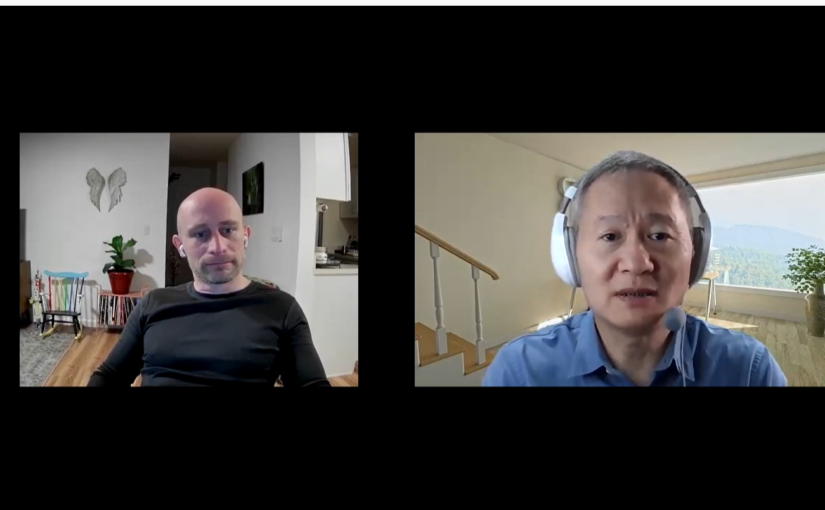
Interview Conducted with Dr. Matthieu Villatte!
Perhaps we are making Philippine history here!
Here’s a video of my interview with Matthieu Villatte, PhD who is an Assistant Professor at Bastyr University in Seattle, WA in the United States.
He obtained his doctoral degree in psychology in France, where he was trained as a clinical psychologist. He moved to the US in 2010 to complete a post-doctoral fellowship at the University of Nevada, Reno under the mentorship of Steven Hayes, PhD.
Matthieu Villatte is the author of numerous books and chapters on mindfulness, acceptance, experiential therapies, and contextual behavioral science, such as the first manual published in French on Acceptance and Commitment Therapy and Mastering the Clinical Conversation: Language as Intervention, co-authored by Jennifer Villatte and Steven Hayes.
In the video, we talked about how the principles of behavioral therapy apply to everyday lives of people, the OFW or migrant worker phenomenon prevailing in the Philippines, as well as the pandemic!

Facing the New Year with Awareness, Courage, and Love
by Nathan Chua
The title of this post is not an original, at least the part that counts most. Many times in my graduate studies, I had wondered what, bottomline, counseling was about. I mean, what is it basically that we are trying to accomplish? At some point in my graduate studies, I thought it was forgiveness. It turns out that I will find an answer to this in my readings of Kevin Polk and his co-authors. It’s about helping clients to become more aware, to act courageously, and to do so lovingly.
Let’s take them one at a time.
Awareness:
Much of what we regret doing stems from acting in ways that are automatic. How often have we seen people commit homicides in this country, only to see them realize that they had lost control over their actions for a split second? There was even a case of a police officer who had a sterling record of service, who now has an indelible audiovisual account of him shooting a hapless middle-aged woman dead. His promising career that took him years to build was upended by a brief moment of rage.
Awareness is a word that I often heard around the graduate classes I attended. In ACT or Acceptance and Commitment Therapy, the word that is more often used to describe awareness is noticing. For me, the gerund form makes it an active pursuit that we can do from moment to moment. If we learn to practice noticing, then there’s a chance for a split second that the police officer I earlier mentioned would be able to choose more effective actions in that moment of rage. It could have averted the loss of two lives. One ended by a shot in the head, while the other was left to languish in prison.
Courage:
One thing ACT has taught me is that noticing is not just noticing or being aware of the difficult thoughts and feelings that we have. It also involves noticing the rest of us. By that I mean, we also notice other facets of the context that can move us in the direction of what is important to us in each moment. Being a complete human being with all its history and complexity involves noticing that part of us that can move towards important ends.
Over involvement in avoiding and controlling difficult inner experiences can lead us to tiring out of life and learning hopelessness is just around the corner anytime. The peculiar thing about us is that we are capable of doing things that we don’t normally expect from ourselves when the stakes are high enough to respond in ways that go beyond our own urges to be self-protective. We seem to be capable of running towards difficult inner experiences rather than run away when it matters. That shy, unassuming classmate of yours can all of a sudden show up in the news being called a hero for saving a complete stranger from a burning car. As Dr. Steven Hayes, the instigator of ACT, loves to say, “That’s just the kind of monkey we are.” So we are capable of doing courageous, selfless acts. It’s just built in. It can resurface in our consciousness if we become more noticing.
Love:
And as we do those courageous acts, we are also capable of seeing the world from other people’s perspectives. We are capable of empathy and acts of kindness in the face of challenging circumstances. You, my readers, do it every day! We can do inconvenient acts for the sake of someone we care for. We come to the side of those who mourn. We help out without anyone knowing. We care for our kids even if it means sacrificing our own convenience.
That in a nutshell can sum up what we do in counseling. Making us the whole human beings that we were meant to be based on how we were wired. It’s not easy being human because we have a very handy tool that can also cause us much suffering. The mind is there to do its job. Objectively noticing that it is neither a boss nor an enemy makes a big difference. We just need to learn to notice it doing its thing, face our fears and do things that matter anyway, and then do it with love and care for ourselves and others as well. In other words, we are all capable of awareness, courage, and love, but sometimes we are not aware, or aware that we are not aware sometimes. And this my friends, takes practice!
Have a more noticing new year to come and thank you for coming to this place for the past 2021.
Listen to this post on Spotify! Click here!

Don’t judge yourself…but how?
by Nathan Chua
Don’t judge yourself!
Well, how’s that done? Unfortunately, once we decide to not judge ourselves for judging ourselves, then what are we doing? We are judging ourselves for judging ourselves. It is not just that we judge, but we judge the judging. So we are judging “judging!”
Let’s do this well-loved exercise to discover how our minds work. If I tell you that you are a pretty okay person, notice what your mind does to that thought. If I tell you that you are the nicest, most wonderful person on the planet that ever lived, notice what your mind does with that thought. Finally, if I tell you, you are the worst and least kind person on the planet, notice what your mind does with that. If you notice, your mind will come up with different thoughts with every comment. It’s like it is arguing with itself and it will not stop!
In its earlier days, ACT was called comprehensive distancing. This means that in ACT, we are not so much interested in the content of our thoughts as the function of our thoughts. In order to do that, we need to separate ourselves from our thoughts. The first step is to notice our thoughts as just thoughts. They don’t have to be gotten rid of or believed or followed.
The key to more psychological freedom is to notice how the mind works. By freedom I don’t mean that we will eventually be free of our thoughts, but rather that we will become more capable of saying no to the dictates of our thoughts. Some of those dictates lead to compliance, while some lead to resistance and judging! In other words, noticing how our minds work helps us to become more capable of making effective choices for a better life.
Now let’s get back to the judging. The mind is an excellent judging machine. It has to because otherwise we would not be as successful a species as we would like. Why is this so? Judging has its uses. In order to survive longer, our minds have to judge the surroundings and look out for threats. Therefore, to know which ones are a threat and which ones are not, our minds would have to judge!
As Dr. Russ Harris illustrates, back when we were cave dwellers, we needed our minds to judge the presence of a threat to our survival. Our minds are there as survival tools that get us through inclement weather, save us from predatory animals, or whatever threats there may be. Unfortunately, that same function of the mind is not limited to external threats only. The human mind translates all signals of threat as one. Regardless of whether it is a physical external threat or an internal one, the signals evoke the same urges to respond in a certain way. The fear of an approaching bear is construed as the same fear when we have thoughts of a bear.
The subject of the work of an ACT therapist is to help the client notice that these mental processes are just that, mental. The noticing is followed by an open stance or a willingness to have such difficult experiences in the service of doing what is important to the client.
So there you are! If there was anything that you and I know about ACT as an approach to therapy, this skill of noticing thoughts as thoughts and judgments as judgments is key! Now how about judging the “judging?” Notice the judging and remember that this is just another function of the mind. There is nothing inherently wrong with judging “judging,” for that is what the mind does. What we can practice is to notice the judging as what it is, not what it says it is.
Our minds are like an overzealous friend who wants to be helpful. It is not our enemy. Think of it as your child just wanting you to be a comfortable and safe parent. Therein lies one of the keys to being mindful and living the mindful life. These parts of you are not your enemies but your friends or your children. Love them for what they are, not as what they say they are, and we’ll soon be on our way to a more loving and more compassionate existence.

Why some remain skeptical about counseling
by Nathan Chua
With the way many mainstream and social media entities have dealt with the topic of mental health, it may be surprising for some to know that therapy and counseling has yet to completely shake off the social stigma attached to seeking help for mental health problems. Although the pandemic could have reduced some of the skepticism, there are still many who are adamant about their views. I know some of you reading this will think, “Uh oh, here we go again, another article in defense of seeking professional help.” Quite the contrary though, and sorry to disappoint you, but this post is more about taking a long hard look at what the profession has done to produce such skepticism. Maybe it’s time to look inside our practices and see what our role is in contributing to this lack of confidence.
In his book, “The Anatomy of an Epidemic,” author and journalist, Robert Whitaker talks about how drugs have been abused to treat otherwise well-functioning individuals who suffered serious albeit temporary mental problems. As I have written before in a previous blog post, this is what Dr. Steven Hayes often refers to as the “DSMization” or biomedicalization of mental health care. Dr. Hayes even encourages dropping the term, “mental health,” for something that is more attuned to what the current science is showing. He suggests the use of mental resilience or mental skills instead. In sum, the current approach of classifying people into categories and subcategories of disease has done more harm than good. It has led to the abuse of medications that more often produce unnecessary and rather serious side effects. I have written about this in a past blog post, so let’s turn now to the crux of what I want to share in this one.
The second point which I want to emphasize for this post is what I heard Dr. Hayes said about our work in the helping profession that uses talking (or language) as a primary medium of change. At the time I heard it, I couldn’t understand what he meant when he said that in our field of work, experience predicts confidence not competence. I even took the time to post my difficulty understanding Dr. Hayes’ words in one of the social media groups I have belonged to since attending some workshops in the past. I didn’t really find any of the comments to my posted question to hit the nail on the head. Finally and luckily, I came across a podcast where Dr. Hayes himself explained what he meant.
It’s pretty much like learning how to shoot the ball in the game of basketball. Looking at how your shot went gives you the feedback you need to see how you can improve your shooting skills, or which shooting form works. Yes, feedback! Now can you imagine if you were shooting with a blindfold all along!
In my first nine years of practice, I had followed what was mostly being taught in mainstream psychology here in the Philippines. Of course, my clients eventually get better! But better at what? Well, mainly they had become better at reducing some of that anxiety, depression, etc. The rule of thumb can be summed up this way, you are here for counseling because you need help in removing some of that difficult feeling inside in order for you to do whatever it is you want moving forward.
At times then I was wondering, do my clients really get better because of my work, or are they just recovering on their own over time? The other side of it is, why are my clients coming back for sessions every time there is a new challenge in front of them? Furthermore, with the approaches I had tried, I had to read up on so many books and enroll in so many training modules in order to address the myriad of cases presented to me! I thought this feels quite like an impossible task! Is there anyone who can master all of these protocols for every mental health concern? Is that even human?
And of course I was getting good feedback, because clients do learn that these difficult emotions do have a shelf life! And I had become their shoulder to cry on when things get rough once again! So who’s the expert here?
Even while I was in business, I was always looking for better stuff. I remember in my 40s, I found myself hitting a ceiling with finding answers through my spiritual journey. And as I pursued further studies in counseling, I hit another ceiling! It felt like whatever I was doing, I could not attest to myself that these same methods I use with my clients do lead me to get past my own limitations!
Now I am not saying here that I have reached some kind of perfection in terms of the way I deal with my personal struggles. In fact, I am still learning up until this writing. But in Contextual Behavioral Science (in general and Acceptance and Commitment Therapy in particular), I think I have found a place where there is a way past that final ceiling. And guess what? If there was something available out there that proves to me that I can find a science that can even be better than what is available in contextual behavioral science, I will take it! Because what matters to me in my work is what actually works! That is why I am now an ACT therapist and a functional contextualist! I think it is by far the most scientifically sound approach and the one that will gradually take me through that hardest of all ceilings! This is the fire that burns in me and the reason why I am passionate about sharing this with you!