Tag: Psychologist Philippines
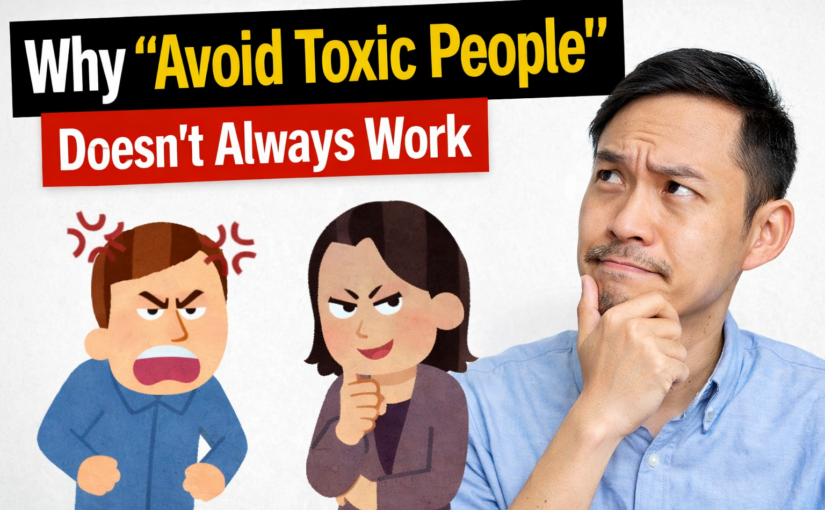
Why Avoiding Toxic People Doesn’t Always Work
Most advice says: “Just avoid toxic people.”
But what if you can’t?
What if that person is your boss, your spouse, your parent, or someone you can’t simply walk away from?
This is where most advice breaks down.
And this is where people start to feel stuck, confused, or even guilty.
If this is your situation, you don’t have to figure it out alone.
👉 Book a confidential session here.
We offer counseling sessions focused on helping you respond more effectively to complex relationship situations — without pressure, judgment, or one-size-fits-all advice.
The Problem with Oversimplified Advice
Advice like “avoid toxic people” works well on social media because it’s clear, direct, and emotionally satisfying. But it can also create guilt and confusion when people find that they can’t actually follow it.
You might start asking yourself:
“What’s wrong with me?”
“Why can’t I just walk away?”
“Am I weak for staying?”
In many cases, the issue is not weakness — it’s context.
A More Workable Question
Instead of asking:
“Should I avoid this person?”
A more helpful question is:
“What is workable in this situation?”
This shifts the focus from rigid rules to practical, real-life solutions.
What You Can Do Instead
Depending on your situation, more workable options may include:
Setting clear but realistic boundaries
Limiting exposure rather than cutting off completely
Changing how you respond in difficult interactions
Building support systems outside the relationship
Gradually creating options if leaving is your long-term goal
Avoidance is sometimes the right choice — but it’s not the only choice.
A More Flexible Way to Think About Relationships
From a contextual behavioral perspective, the goal is not to follow rules perfectly, but to respond in ways that actually improve your life over time.
Some relationships require distance.
Some require boundaries.
Some require patience and strategy.
And some, eventually, may require letting go.
But the key is this:
The best choice is the one that is workable in your real-life context — not just what sounds good in theory.
Watch the Full Video
Watch the full discussion above to explore this idea in more detail and learn how to apply it to your own relationships.
If this is something you’re going through, you’re not alone.
👉👉 Book a session here to talk this through
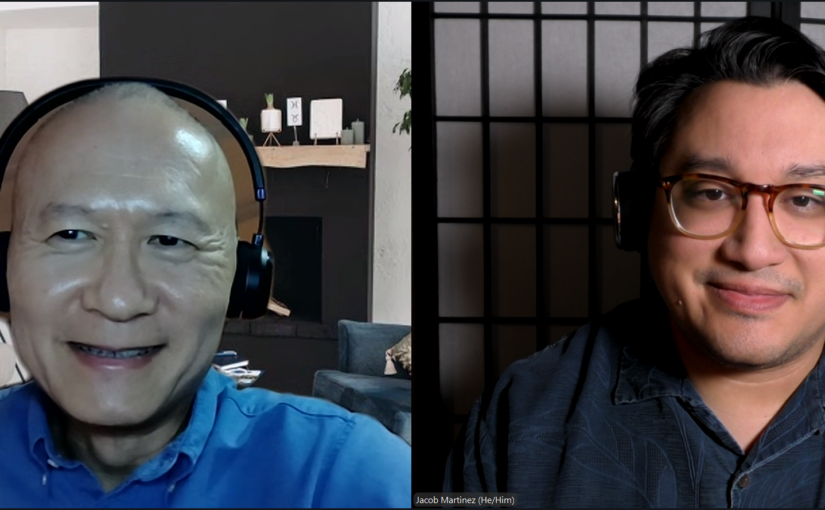
From Participant to Contributor: A Guest Segment for a PESI ACT Training
I was recently invited by Jacob Martinez, a licensed professional counselor from Wisconsin, to contribute to an international ACT training series in collaboration with PESI.
For many years, I’ve been on the other side of these trainings—as a participant, learning from international clinicians and trying to make sense of how these ideas apply in real-world settings.
This invitation marks a meaningful shift for me: from learning within that space to contributing to it.
In this 45-minute segment, I discuss a core distinction in contextual behavioral science:
Functional coherence vs essential coherence.
In simple terms:
Essential coherence asks: “Is this true? What is this really?”
Functional coherence asks: “Does this work? What does this lead to?”
Most of us—including many clinicians—are trained to think in essential terms: labels, traits, diagnoses, and fixed explanations about “what a person is.”
ACT takes a different approach.
Instead of focusing on what thoughts or emotions are, it focuses on what they do—how they function in context, and whether they help a person move toward a meaningful and workable life.
This shift may seem subtle, but it has wide implications—not just for therapy, but for how we understand relationships, culture, and social issues.
I’m sharing this here in the hope of making these ideas more accessible, especially within the Filipino context, where moral and label-based thinking are often emphasized.
Because the real shift is not just learning new techniques.
It’s learning to see behavior differently.
▶️ Watch the full 45-minute training here:
https://spotifycreators-web.app.link/e/bZHvvPXmV1b
How long should therapy last?
What to do when jealousy strikes your relationship?
@onelifeonlycounseling What to do when jealousy strikes your relationship? Jealousy is one of the most painful emotions in a relationship. It can make one partner shrink their world out of fear… and push the other partner into panic, defensiveness, and exhaustion. In this video, counselor Nathan Chua (One Life Only Counseling Services) explains jealousy through a contextual behavioral lens (ACT + IBCT) — showing why jealousy narrows our world, how fear takes over, and how partners can respond from values instead of panic. You’ll learn: ❤️ What jealousy is really trying to protect ❤️ Why interrogation, control, and defensiveness make things worse ❤️ How to use the “friend experiment” to guide healthier choices ❤️ How the wrongly-accused metaphor helps partners act with dignity ❤️ Why relationships improve when love — not fear — takes the lead Remember: No relationship gets healthier by obeying fear. It gets healthier when partners act from the kind of love they want to stand for… even when fear is in the room. #OneLifeOnlyCounseling NathanielChua ACTtherapy IBCT JealousyInRelationships RelationshipAdvice ContextMatters LoveAndFear MentalHealthAwareness PsychologicalFlexibility CouplesTherapy#fyp #counselingphilippines #foryou #PsychologyVlog #counseling #onelifeonlycounseling
♬ original sound – One Life Only Counseling – One Life Only Counseling
Jealousy is one of the most painful emotions in a relationship.
It can make one partner shrink their world out of fear…
and push the other partner into panic, defensiveness, and exhaustion.
In this video, counselor Nathan Chua (One Life Only Counseling Services) explains jealousy through a contextual behavioral lens (ACT + IBCT) — showing why jealousy narrows our world, how fear takes over, and how partners can respond from values instead of panic.
You’ll learn:
❤️ What jealousy is really trying to protect
❤️ Why interrogation, control, and defensiveness make things worse
❤️ How to use the “friend experiment” to guide healthier choices
❤️ How the wrongly-accused metaphor helps partners act with dignity
❤️ Why relationships improve when love — not fear — takes the lead
Remember:
No relationship gets healthier by obeying fear.
It gets healthier when partners act from the kind of love they want to stand for…
even when fear is in the room.
#OneLifeOnlyCounseling #NathanielChua
#ACTtherapy #IBCT #JealousyInRelationships
#RelationshipAdvice #ContextMatters
#LoveAndFear #MentalHealthAwareness
#PsychologicalFlexibility #CouplesTherapy
Has Psychology Lost its Soul?
https://spotifycreators-web.app.link/e/iUYZfzCYaYb
@onelifeonlycounseling Has Psychology Lost its Soul? When a person is in pain, we rush to name it. We call it depression, trauma, narcissism. And when someone speaks about it, we ask: “Are they qualified?” Somehow, we’ve turned understanding into a privilege — guarded by titles, diagnoses, and institutional approval. But psychology, at its heart, was never meant to be a priesthood. It was meant to be a language of compassion — a way for all of us to understand what it means to be human. In this video, counselor Nathaniel Chua of One Life Only Counseling Services reflects on how modern psychology may have lost its soul — and how functional contextualism (the science behind Acceptance and Commitment Therapy) offers a way back. It’s a call to move beyond labels, diagnoses, and hallowed titles — toward a kind of psychology that belongs not to experts, but to everyone who is learning to understand themselves and others. “We don’t need more experts. We need more understanding.” – Steven C. Hayes 🎧 Watch or listen to the full reflection on One Life Only Counseling Services: www.onelifeonly.net. HasPsychologyLostItsSoul #OneLifeOnlyCounseling NathanielChua ACTtherapy IBCT FunctionalContextualism StevenHayes AcceptanceAndCommitmentTherapy ContextMatters MentalHealthAwareness TherapyPhilippines BeyondLabels HumanUnderstanding ValuesBasedLiving PsychologicalFlexibility MeaningfulPsychology#fyp #foryou #counselingphilippines #PsychologyVlog #counseling #onelifeonlycounseling
♬ original sound – One Life Only Counseling – One Life Only Counseling
When a person is in pain, we rush to name it.
We call it depression, trauma, narcissism.
And when someone speaks about it, we ask: “Are they qualified?”
Somehow, we’ve turned understanding into a privilege — guarded by titles, diagnoses, and institutional approval.
But psychology, at its heart, was never meant to be a priesthood.
It was meant to be a language of compassion — a way for all of us to understand what it means to be human.
In this video, counselor Nathaniel Chua of One Life Only Counseling Services reflects on how modern psychology may have lost its soul — and how functional contextualism (the science behind Acceptance and Commitment Therapy) offers a way back.
It’s a call to move beyond labels, diagnoses, and hallowed titles —
toward a kind of psychology that belongs not to experts,
but to everyone who is learning to understand themselves and others.
“We don’t need more experts.
We need more understanding.” – Steven C. Hayes
🎧 Watch or listen to the full reflection on One Life Only Counseling Services: www.onelifeonly.net.
#HasPsychologyLostItsSoul #OneLifeOnlyCounseling #NathanielChua #ACTtherapy #IBCT #FunctionalContextualism #StevenHayes #AcceptanceAndCommitmentTherapy #ContextMatters #MentalHealthAwareness #TherapyPhilippines #BeyondLabels #HumanUnderstanding #ValuesBasedLiving #PsychologicalFlexibility #MeaningfulPsychology
How to build confidence – Not what you might think!
@onelifeonlycounseling What’s the best way to build confidence? Most of us are told to “think positive,” repeat affirmations like “I am strong, I am confident,” or wait until we feel ready. But does it really work? In this video, I share a different, counterintuitive approach. Drawing from my work as a counselor and insights from behavioral science, I’ll show you why confidence isn’t something you wait for or force with pep talks. Instead, it’s something you build by admitting your non-confidence — and taking action anyway. If you’ve ever struggled with self-doubt, fear, or that nagging thought that you’re “not enough,” this vlog is for you. 👉 Watch until the end for the surprising truth about where genuine confidence really comes from. — 📌 Subscribe for more counseling insights and mental health reflections 📌 Learn more about my practice: onelifeonly.net — BuildConfidence ConfidenceTips OvercomeFear Motivation TherapyInsights ACTTherapy RelationalFrameTheory SelfImprovement MindsetShift #OneLifeOnlyCounseling #counseling #counselingphilippines#PsychologyVlog #onelifeonlycounseling #counseling #counselingphilippines #fyp #foryou
♬ original sound – One Life Only Counseling – One Life Only Counseling
Two Shrinks Over Drinks 16th Anniversary Interview with Matthieu Villatte
Another Two Shrinks Over Drinks with Dr. Hank Robb
Erratum: B.F. Skinner did write on page 156 of his novel Walden 2 his desire for a society that does not give special honor to members of the community through the words of Frazier. Here’s part of the quote:
“We are opposed to personal competition. We don’t encourage competitive games…We never mark any member for special approbation…A triumph over another man is never a laudable act. Our decision to eliminate personal aggrandizement arose quite naturally from the fact that we were thinking about the whole group. We do not see how the group could gain from individual glory.”
Knowing Your Potential Mate
by Nathan Chua
I am writing this not to advocate for any external form of ritual bonding for couples. I have lately ended up telling my clients that neither am I a priest nor a pastor. I am not here to judge what their lives are and what they’re supposed to do or not. I am duty bound to respect anyone who comes to see me for their important questions about their lives. So it doesn’t matter if you’re monogamous or polyamorous, straight or non-straight, what ends up mattering in our work is if you are living your life according to your best hopes for your short existence.
Now let’s get on with the topic at hand. How many times have you ended up being in a long(er) term relationship with someone who turns out to be totally different from your own images of what a pair bond is supposed to be? Have you ever heard of people who have jumped from one abusive relationship to another? Here are some tips about knowing if you have someone worth considering in front of you:
Be Mindful, Not Blind:
It is understandable that you may have a shortlist of what you want to look for in a partner. This certainly provides greater probability of success than just random choice. Unfortunately, predicting how you and another human being will do in a close relationship is something that the shortlist will never be able to guarantee. What I am saying here is that people are unique and can hardly be summarized in a short checklist. No matter how long this list will be, not one person can match everything that you want.
Getting to know someone is pretty much like learning how to ride a bike, swim, or even walk! There is no instruction manual good enough or long enough to tell you how to do these activities. And so it is with relationships! You won’t really get to know a person thoroughly by just comparing them to a checklist of qualities. Why? Because all behavior happens in context. It’s easy to think about a person’s behavioral choices in a vacuum. We usually do not appreciate the contexts in which these behaviors happen and blindly follow rules that end up with well, blind choices. Your potential mate may be nice in a date, but what are they like in traffic or stressful situations?
There are certainly good reasons why we should trust our minds when it comes to fending off a virus or an infection. But trusting our logical minds to fend off the difficult feelings, thoughts, and memories that we experience in relationships, is a route towards possibly worse outcomes. I often use an example of how our problem-solving minds are an absolute gift. Mosquitoes are some of the worst threats to our health. Without our problem-solving minds, we would not learn to slap them dead on our arms or invent a lotion to repel them. We are quick to apply the same kind of problem-solving skill to our feelings and thoughts. The bad news is there is no slap strong enough to keep your feelings away, nor is there an off lotion version that works to remove our unpleasant internal experiences. If there was, please tell me. Unless it’s some sort of drug or substance that sedates you, then feel free to reach me so I can take these substances myself. I don’t think living a life numbed out or sedated is what I bargained for.
Why is this worth mentioning? Well, in a relationship your logical, sensical mind will tell you that your partner should never arouse any difficult feelings. So, good luck with that if you aren’t mindful enough to notice the rule inside your head. Relationships come with feelings. In fact, you wouldn’t be in a relationship if it meant you were just going to be half awake all the time. You’re there to feel something moving and purposeful. You’re not there for a stale lifeless existence! So be mindful of what you see in your partner in different situations. See if you share the same hopes and cherished values.
Keep in Touch with your Feelings:
As you spend time with a person, you would probably get a sense of what it feels like to be in their company. Do you feel a sense of loneliness? Maybe you are with someone who is preoccupied with themselves; they hardly hear what you have to contribute. Do you feel incensed or angered that this person can’t make a commitment to arrive on time or do as they promise to do? Maybe this person is lacking in empathy and consideration.
If you are one of those who jump from one abusive relationship to another, then maybe it’s time for you to step back and listen to your feelings. Maybe you are so tunnel-visioned into thinking what story your mind is creating about your long term relationship. Maybe it’s time to wake up and check your feelings when you are with this person.
I remember a story of the character of Lt. Dan in the movie Forrest Gump. He, like all of us, created a story of his fate after the Vietnam war. He wanted to die in war just like his war hero ancestors. Just as you and I know, sometimes life happens however. In his case, Gump happened…to save him from his inevitable passing as a war hero. Unable to reconcile his experience with the story his mind wanted to create, he lived his life purposefully wasting his time fighting the memory or thoughts of an opportunity lost with the amputated legs serving as a constant reminder of a missed opportunity to fulfill his mind’s vision of a destiny. In the end, he realized that he can still be the hero unto himself; the one who harbored a hope of living his life without his amputated legs but with much purpose as just Dan, the man, who may not be the war hero he dreamt of becoming, but a person of worth nonetheless.
Just as Lt. Dan started to let go of his grand story of what he wants about his life, maybe you also can hold these love stories lightly, and see if this person is worth your time and love.