What does it mean to be perfect?

The word perfect comes from the Latin perfectus.
It originally meant complete.
Not flawless.
Not superior.
Not better than others.
Complete.
The problem-solving mind spends much of its time convincing us that something is missing.
Yet before we were successful or unsuccessful, admired or rejected, confident or insecure, we were already human.
Perhaps perfection is not becoming someone else.
Perhaps it is living fully as the person you already are.
You are not an unfinished human waiting for permission to exist.

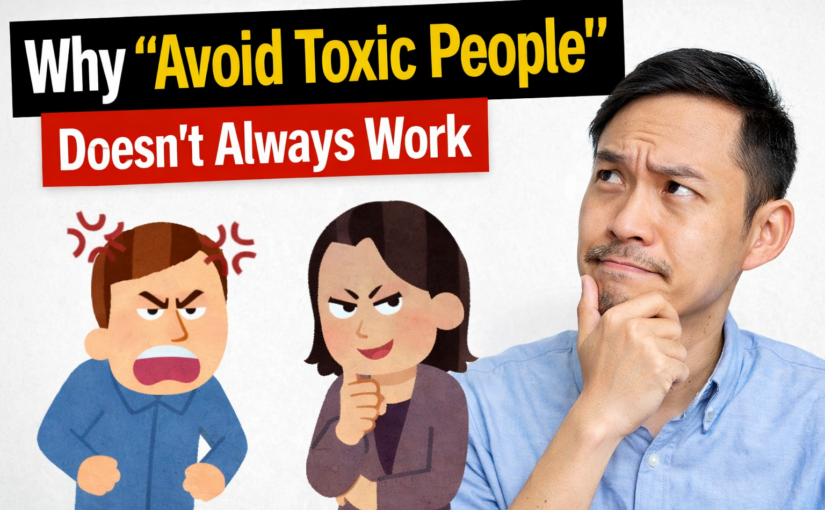
Why Avoiding Toxic People Doesn’t Always Work

Most advice says: “Just avoid toxic people.”

But what if you can’t?

What if that person is your boss, your spouse, your parent, or someone you can’t simply walk away from?

This is where most advice breaks down.

And this is where people start to feel stuck, confused, or even guilty.

If this is your situation, you don’t have to figure it out alone.

👉 Book a confidential session here.

We offer counseling sessions focused on helping you respond more effectively to complex relationship situations — without pressure, judgment, or one-size-fits-all advice.

The Problem with Oversimplified Advice

Advice like “avoid toxic people” works well on social media because it’s clear, direct, and emotionally satisfying. But it can also create guilt and confusion when people find that they can’t actually follow it.

You might start asking yourself:

“What’s wrong with me?”
“Why can’t I just walk away?”
“Am I weak for staying?”

In many cases, the issue is not weakness — it’s context.

A More Workable Question

Instead of asking:

“Should I avoid this person?”

A more helpful question is:

“What is workable in this situation?”

This shifts the focus from rigid rules to practical, real-life solutions.

What You Can Do Instead

Depending on your situation, more workable options may include:

Setting clear but realistic boundaries
Limiting exposure rather than cutting off completely
Changing how you respond in difficult interactions
Building support systems outside the relationship
Gradually creating options if leaving is your long-term goal

Avoidance is sometimes the right choice — but it’s not the only choice.

A More Flexible Way to Think About Relationships

From a contextual behavioral perspective, the goal is not to follow rules perfectly, but to respond in ways that actually improve your life over time.

Some relationships require distance.
Some require boundaries.
Some require patience and strategy.

And some, eventually, may require letting go.

But the key is this:

The best choice is the one that is workable in your real-life context — not just what sounds good in theory.

Watch the Full Video

Watch the full discussion above to explore this idea in more detail and learn how to apply it to your own relationships.

If this is something you’re going through, you’re not alone.

👉👉 Book a session here to talk this through

From Participant to Contributor: A Guest Segment for a PESI ACT Training

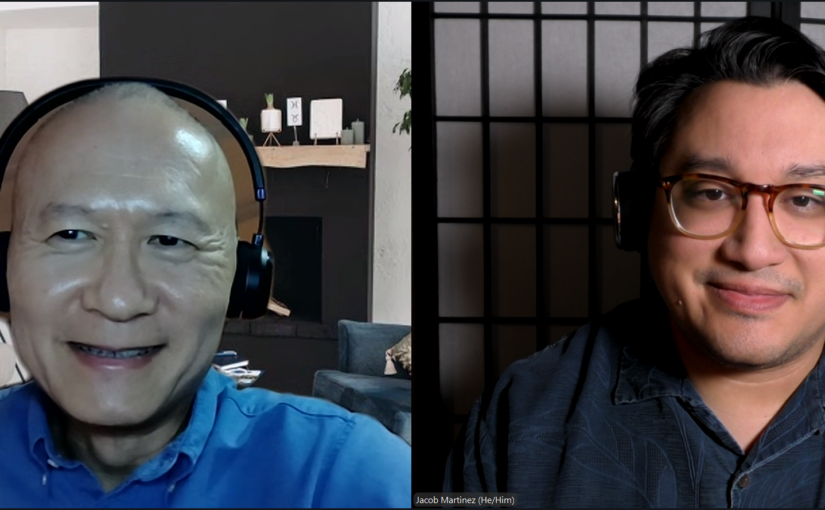
I was recently invited by Jacob Martinez, a licensed professional counselor from Wisconsin, to contribute to an international ACT training series in collaboration with PESI.

For many years, I’ve been on the other side of these trainings—as a participant, learning from international clinicians and trying to make sense of how these ideas apply in real-world settings.

This invitation marks a meaningful shift for me: from learning within that space to contributing to it.

In this 45-minute segment, I discuss a core distinction in contextual behavioral science:

Functional coherence vs essential coherence.

In simple terms:

Essential coherence asks: “Is this true? What is this really?”
Functional coherence asks: “Does this work? What does this lead to?”

Most of us—including many clinicians—are trained to think in essential terms: labels, traits, diagnoses, and fixed explanations about “what a person is.”

ACT takes a different approach.

Instead of focusing on what thoughts or emotions are, it focuses on what they do—how they function in context, and whether they help a person move toward a meaningful and workable life.

This shift may seem subtle, but it has wide implications—not just for therapy, but for how we understand relationships, culture, and social issues.

I’m sharing this here in the hope of making these ideas more accessible, especially within the Filipino context, where moral and label-based thinking are often emphasized.

Because the real shift is not just learning new techniques.

It’s learning to see behavior differently.

▶️ Watch the full 45-minute training here:

https://spotifycreators-web.app.link/e/bZHvvPXmV1b


Solving Corruption Psychologically…Contextually!

@onelifeonlycounseling

Solving Corruption Psychologically…Contextually! Why does corruption survive no matter who we elect… or how many new rules we create? In this video, I explain corruption through a behavioral and cultural lens — not politics. No partisanship. No personalities. Just the psychology and context behind why our system keeps producing the same problems. Here’s the truth: 🔸 Low-trust societies accumulate corruption — even without evil people. 🔸 More rules often create more bottlenecks… and more shortcuts. 🔸 Culture can block good governance even when plans are smart. 🔸 Real change begins with context — not fear, not shame, not moralizing. If you want a fresh, science-based explanation of why corruption persists in the Philippines — and what actually builds cooperation — watch this. Better People, Better Country. But better people come from better contexts.

♬ original sound – One Life Only Counseling – One Life Only Counseling

What to do when jealousy strikes your relationship?

@onelifeonlycounseling

What to do when jealousy strikes your relationship? Jealousy is one of the most painful emotions in a relationship. It can make one partner shrink their world out of fear… and push the other partner into panic, defensiveness, and exhaustion. In this video, counselor Nathan Chua (One Life Only Counseling Services) explains jealousy through a contextual behavioral lens (ACT + IBCT) — showing why jealousy narrows our world, how fear takes over, and how partners can respond from values instead of panic. You’ll learn: ❤️ What jealousy is really trying to protect ❤️ Why interrogation, control, and defensiveness make things worse ❤️ How to use the “friend experiment” to guide healthier choices ❤️ How the wrongly-accused metaphor helps partners act with dignity ❤️ Why relationships improve when love — not fear — takes the lead Remember: No relationship gets healthier by obeying fear. It gets healthier when partners act from the kind of love they want to stand for… even when fear is in the room. #OneLifeOnlyCounseling NathanielChua ACTtherapy IBCT JealousyInRelationships RelationshipAdvice ContextMatters LoveAndFear MentalHealthAwareness PsychologicalFlexibility CouplesTherapy#fyp #counselingphilippines #foryou #PsychologyVlog #counseling #onelifeonlycounseling

♬ original sound – One Life Only Counseling – One Life Only Counseling

Jealousy is one of the most painful emotions in a relationship.
It can make one partner shrink their world out of fear…
and push the other partner into panic, defensiveness, and exhaustion.

In this video, counselor Nathan Chua (One Life Only Counseling Services) explains jealousy through a contextual behavioral lens (ACT + IBCT) — showing why jealousy narrows our world, how fear takes over, and how partners can respond from values instead of panic.

You’ll learn:

❤️ What jealousy is really trying to protect
❤️ Why interrogation, control, and defensiveness make things worse
❤️ How to use the “friend experiment” to guide healthier choices
❤️ How the wrongly-accused metaphor helps partners act with dignity
❤️ Why relationships improve when love — not fear — takes the lead

Remember:
No relationship gets healthier by obeying fear.
It gets healthier when partners act from the kind of love they want to stand for…
even when fear is in the room.

#OneLifeOnlyCounseling #NathanielChua
#ACTtherapy #IBCT #JealousyInRelationships
#RelationshipAdvice #ContextMatters
#LoveAndFear #MentalHealthAwareness
#PsychologicalFlexibility #CouplesTherapy

Has Psychology Lost its Soul?

https://spotifycreators-web.app.link/e/iUYZfzCYaYb

@onelifeonlycounseling

Has Psychology Lost its Soul? When a person is in pain, we rush to name it. We call it depression, trauma, narcissism. And when someone speaks about it, we ask: “Are they qualified?” Somehow, we’ve turned understanding into a privilege — guarded by titles, diagnoses, and institutional approval. But psychology, at its heart, was never meant to be a priesthood. It was meant to be a language of compassion — a way for all of us to understand what it means to be human. In this video, counselor Nathaniel Chua of One Life Only Counseling Services reflects on how modern psychology may have lost its soul — and how functional contextualism (the science behind Acceptance and Commitment Therapy) offers a way back. It’s a call to move beyond labels, diagnoses, and hallowed titles — toward a kind of psychology that belongs not to experts, but to everyone who is learning to understand themselves and others. “We don’t need more experts. We need more understanding.” – Steven C. Hayes 🎧 Watch or listen to the full reflection on One Life Only Counseling Services: www.onelifeonly.net. HasPsychologyLostItsSoul #OneLifeOnlyCounseling NathanielChua ACTtherapy IBCT FunctionalContextualism StevenHayes AcceptanceAndCommitmentTherapy ContextMatters MentalHealthAwareness TherapyPhilippines BeyondLabels HumanUnderstanding ValuesBasedLiving PsychologicalFlexibility MeaningfulPsychology#fyp #foryou #counselingphilippines #PsychologyVlog #counseling #onelifeonlycounseling

♬ original sound – One Life Only Counseling – One Life Only Counseling


When a person is in pain, we rush to name it.

 We call it depression, trauma, narcissism.

 And when someone speaks about it, we ask: “Are they qualified?”

Somehow, we’ve turned understanding into a privilege — guarded by titles, diagnoses, and institutional approval.

 But psychology, at its heart, was never meant to be a priesthood.

 It was meant to be a language of compassion — a way for all of us to understand what it means to be human.

In this video, counselor Nathaniel Chua of One Life Only Counseling Services reflects on how modern psychology may have lost its soul — and how functional contextualism (the science behind Acceptance and Commitment Therapy) offers a way back.

It’s a call to move beyond labels, diagnoses, and hallowed titles —

 toward a kind of psychology that belongs not to experts,

 but to everyone who is learning to understand themselves and others.

“We don’t need more experts.

 We need more understanding.” – Steven C. Hayes

🎧 Watch or listen to the full reflection on One Life Only Counseling Services: www.onelifeonly.net.


#HasPsychologyLostItsSoul #OneLifeOnlyCounseling #NathanielChua #ACTtherapy #IBCT #FunctionalContextualism #StevenHayes #AcceptanceAndCommitmentTherapy #ContextMatters #MentalHealthAwareness #TherapyPhilippines #BeyondLabels #HumanUnderstanding #ValuesBasedLiving #PsychologicalFlexibility #MeaningfulPsychology


How to Make Wiser Choices…A Mental Health Month Exercise

https://open.spotify.com/episode/1TzK4XegVU29r5CRNWgiql?si=Qguu6Hj1RUuS12uUF07QcA

@onelifeonlycounseling

How to Make Wiser Choices…A Mental Health Month Exercise What do you do when your mind pulls you in two directions — between what you should do and what you want to do? In this Mental Health Month reflection, therapist Nathaniel Chua from One Life Only Counseling Services shares a simple yet powerful ACT-based exercise that helps you pause, notice old survival rules, and choose from your values instead of your fears. Through the Two Truths Practice, you’ll learn how to: ✅ Recognize the “fight, flight, freeze” rules that still shape your reactions. ✅ Make peace with both sides of yourself — the fearful and the brave. ✅ Use your inner GPS (your values) to make wiser choices in life. True mental health isn’t about erasing struggle — it’s about creating space to live meaningfully, even with it. 💬 Try the exercise: 1️⃣ Name both sides of your inner conflict. 2️⃣ Validate both — they each want something good for you. 3️⃣ Let your values guide your next small step. If this message resonates with you, don’t forget to like, share, and subscribe for more reflections that combine psychology, compassion, and everyday wisdom. #OneLifeOnlyCounseling MentalHealthMonth ACTtherapy PsychologicalFlexibility SelfAcceptance ValuesBasedLiving MindfulnessPractice InnerPeace TherapyPhilippines NathanielChua MentalHealthAwareness SelfGrowth AcceptanceAndCommitmentTherapy FunctionalContextualism#fyp #foryou #counselingphilippines #PsychologyVlog #counseling #onelifeonlycounseling

♬ original sound – One Life Only Counseling – One Life Only Counseling


Another Two Shrinks Over Drinks with Dr. Hank Robb

Erratum:  B.F. Skinner did write on page 156 of his novel Walden 2 his desire for a society that does not give special honor to members of the community through the words of Frazier.  Here’s part of the quote:

“We are opposed to personal competition.  We don’t encourage competitive games…We never mark any member for special approbation…A triumph over another man is never a laudable act.  Our decision to eliminate personal aggrandizement arose quite naturally from the fact that we were thinking about the whole group.  We do not see how the group could gain from individual glory.”