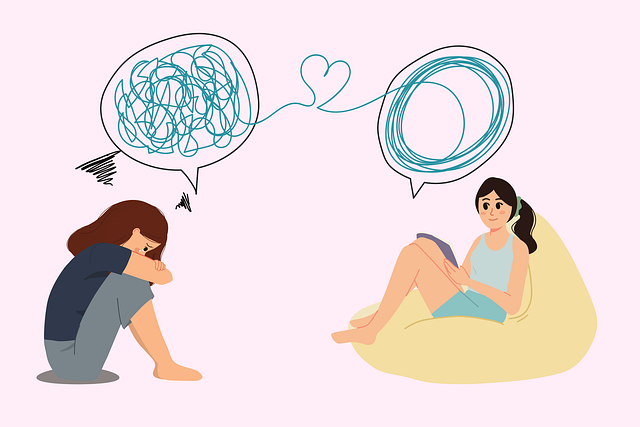
How humor can save your relationship

by Nathan Chua

We are funny creatures, I have heard Dr. Steven Hayes say in one of his interviews.  In the approach that I use for my couples, there is a component that endeavors to help couples reach a level of objectivity especially with regard to their differences.  These differences are part of what they bring into the relationship given their histories both from within and outside the relationship.

To illustrate this, let me use an example that is quite a common issue among many couples.  A fairly common difference that couples experience is their issues about time and patience in certain contexts.  One might be slower than the other.  Your partner may be patient in certain circumstances while not so much in others.  This may or may not change in your partner.  They can be patient as a lamb while waiting for you at the salon but not as patient when waiting at the parking lot.  The cases I see mostly have very short fuses when it comes to these enduring differences.  It is quite usual that I see couples who complain about major fights and when asked to describe them, would regularly come up with a realization of how trivial the subject of the conversation was to begin with. 

Here are a couple of ways you can better cope with such differences.  Let’s use the example we just used about waiting.  If your partner does not like waiting at the parking lot, then there must be something about that context that makes it problematic for them.  See if you can understand what’s behind it.  Maybe they are very prompt most of the time and having them wait at a parking lot conjures up some thoughts that make them more anxious.  Something they might have learned in childhood or from a previous relationship.  You can also recall how much this promptness has made you come to like them in your earlier interactions.  As I often share with my clients, if we have time during the session, can you recall what made you like your partner the first time you met?  Often, couples will come to see that what is now a sticky issue between them, was part of what initially made them attracted to each other.  Qualities that endear you to one another may turn out to be a double-edged sword.  The promptness that you came to like from your partner can have impatience on its flipside. 

The second tip I have for you today is how to deal with this problem and is actually the topic of this article.  Humor!  First of all, you have to be aware and mindful of the situations where potential conflict on this issue may arise.  In other words, have some foresight.  Knowing fully well that your partner can be impatient in such situations, find a way to take that scowl on your partner’s face more lightly.  A good example is saying, “Oh I’m so sorry I was five seconds late.  I promise to keep it at four seconds next time.  I know four is okay, but five is a bit much.  My bad!”  Of course, say it with the matching facial expression and tone.  I hope though that you have a modicum of comedic timing.  Finally, please time it when you’re indeed five seconds late!

If you have been to a wedding anniversary celebration a few times, you might notice some of the ways couples cope with their enduring differences and sensitivities.  It’s a mixed bag of emotions.  You might have seen some tears welling up around the couple’s eyes as they face each other to renew their vows, even as they come up with funny experiences they’ve had in the past about the trivial things they fight about.  Remember the proverbial toothpaste and toilet habits?  Why?  Because that’s what life and relationships are all about.  It’s hard work but at the same time as funny and rewarding as they can be.     

Remember, coming to couples therapy is limited to an hour or so of work every week.  It will not drastically change who you are as individuals.  Maybe you can recall some widows or widowers you have visited after the demise of their partners.  They would cry and laugh throughout the wake.  Laugh because of those treasured moments of laughter that their differences provided.  It was hard and came from having years of practice and wisdom, that couples have come to accept and love in each other with a bit of humor, of course. 

Listen to this blogpost on Spotify!  Go to this link!

Divorced? Separated? What can you do?

by Nathan Chua

It took quite a while, but after listening to a podcast interview between Steven Hayes and a couple of divorced individuals, I realized that there is a significant part of the population that I might have missed writing about in a while.  I mean we even have local laws that give this segment of our population the same perks as the elderly and differently-abled.  Like them, I have also had my share of failed relationships to say the least!  How could I?

One of the main problems that people in this segment find themselves in is the walls that they can build around them.  Borrowing from an illustration that Dr. Hayes used to describe what these walls signify in our language, it is like asking these clients who have chosen this path after a painful end to a relationship to fill in the blank in this statement, “I will never be that _________ again.”  The words that came out of your head tell you what these walls were meant to protect.  In the interview Dr. Hayes and the interviewers came up with the following:  trusting, innocent, and vulnerable.

Now don’t get me wrong though, there is a place to be mindful of red flags in a potential relationship.  But for many who become closed off to relationships and the risks of having one again, they usually end up lonely.  They substitute the pain of presence with the pain of absence.

Here’s my version of a little metaphor that Dr. Darin Cairns used in one of his demonstration counseling sessions.  If you were playing a therapist to a client named Joe, who decided after being dumped by the love of his life, to remain closed off from any future dates with other women, ask yourself a few questions about him.  Do you think that Joe would become safer and less vulnerable to getting hurt?  Of course.  In the long term though, if he remains unwilling to go out and date someone, do you think he’d be happier?  Would he be more or less lonely using this way of coping in the long run?  You’d probably say no to both.  

Recovering from a lost relationship takes a bit of a balance.  You and I still have that part of us that’s willing to go out there and try something different.  It is something we share with other animals.  We learn by trial and error.  We have a bonus though, we also have minds that can direct us to what really matters to us in the long run.  If we learn to open up to the pain of our past, we also learn that we care about relationships, or what it is that’s important to us.  If you sense the same negative feelings you have had with that abusive partner, then it’s probably time to say no to another one.  The problem happens when you and I close off to those painful memories of the past, then we are liable to become victims of the same problems in the future because we don’t learn from them.  We just run away from them.  

We might also cling on to the belief that somehow our relationship will change the person in front of us.  Our problem-solving minds really try to do us the service of staying away from unpleasant thoughts and feelings and clinging on to the pleasant ones, so much so that we are left unaware of the possibility that we are falling into the same traps in the past.  Yes, it may feel good to see how you changed the individual in front of you, but do wait for a while and see if it lasts.  As Dr. Russ Harris mentioned in one of his training modules, there is a difference between blind and mindful trust.

To summarize, if there was a rule that I can recommend you do in your future as a single individual looking for companionship or deciding to choose a life as a single, then it is this.  Be mindful.  Be mindful of what you see in front of you, be mindful of your thoughts and feelings, and be mindful of your dreams and aspirations.  Maybe then you’d come to see that whether you remain single or find that relationship that you’ve been looking for, you still have a full life in front of you that’s vital and challenging at the same time.    

You can regain that vulnerability and innocence all over again, but also be wiser and more mindful at the same time.       

Listen to this blogpost on Spotify! Click here!      

Climbing the Mountain of Your Life

by Nathan Chua

Have you lost hope recently?  Does it feel like you have hit a ceiling in your life?  Does it feel like everything is just one dreadful day after another?  Has life turned into a series of musts, shoulds, and can’ts?  Are you tired of running away?  Perhaps running away from a life that you had always wanted?  What is left to pursue with your time? 

Whether it’s an addiction, anxiety, depression, or whatnot, it’s probably time to change your perspective on what’s going on with your life.  If feeling safe is what you had been looking for in a long time, then you might notice that it is only a matter of time when your anxiety, depression, addictive urges, or anger catch up with you.  It’s a fruitless endeavor.  Why?  Because you had been hardwired to have them.  To what extent will depend much on your personal history.  Unfortunately, no matter what, your personal history is going to be with you.  Your memories are not your roommates that you can avoid by just picking another place to stay. 

Clients who start gaining the ability to move forward in their lives would often run back for help whenever there are new challenges that come or when these obstacles feel insurmountable.  Well, here is something that might encourage you.  Let’s say you are a mountain climber.  As you climb up that mountain, you would probably feel the challenges getting more daunting. Why?  Because the higher you go the harder your fall will be.  You also notice that you begin to have some bruises or more tired muscles as you reach one milestone after another.  Your supplies may also show that you have less of what’s left as you climb.  There may also have been unexpected delays or injuries that needed more time to heal.

Such is life when you go after what it is that gives it meaning and purpose.  Success or no success, what’s important is the climbing.  I mean you probably wouldn’t exchange the experience with just having a drive up the mountain in a nice SUV.  

You might be reading this and think about what this has got to do with your problems.  Let’s say you have the dream of finding a partner that you can love.  You may fail along the way.  Not all your relationships end up with an exchange of vows.  The other end of this journey could be finding the person with whom you want to spend the rest of your life.  Either way there is one common denominator in this pursuit of a meaningful relationship.  You want to be in a relationship because you want to love and care for someone.  And this doesn’t change regardless of outcomes, but the challenges can change and become even more challenging.

Another example is, you might be working hard for your dreams of sharing the fruits of your labor with people you care for.  Bottom line is you probably are not working for money for the sake of one day lying down on top of it.  You probably want to use this money for the people that matter to you, including yourself and maybe that sense of being independent.  Whether you succeed or not in making the level of income you want, it would not change the fact that you wanted to be generous with what you earn.  So the outcome doesn’t really change who you are and what you want to be.  That’s a constant companion.  They are your dreams and aspirations of being the person you want to be and living the life you want to live.

So let that mountain that I just stuck in your mind be your guiding metaphor.  As you climb higher towards your dreams, you will have new and more difficult challenges that will come.  Learning how to embrace them as opportunities to continue with your mission is the key.  It is not about results, it’s about you and your dream of just being what you want to be in every step of your way there.  

Listen to this blogpost on Spotify! Click here!     

Interview Conducted with Dr. Matthieu Villatte!

Perhaps we are making Philippine history here!

Here’s a video of my interview with Matthieu Villatte, PhD who is an Assistant Professor at Bastyr University in Seattle, WA in the United States.

He obtained his doctoral degree in psychology in France, where he was trained as a clinical psychologist. He moved to the US in 2010 to complete a post-doctoral fellowship at the University of Nevada, Reno under the mentorship of Steven Hayes, PhD. 

Matthieu Villatte is the author of numerous books and chapters on mindfulness, acceptance, experiential therapies, and contextual behavioral science, such as the first manual published in French on Acceptance and Commitment Therapy and Mastering the Clinical Conversation: Language as Intervention, co-authored by Jennifer Villatte and Steven Hayes.

In the video, we talked about how the principles of behavioral therapy apply to everyday lives of people, the OFW or migrant worker phenomenon prevailing in the Philippines, as well as the pandemic!

Listen to the audio version on Spotify! Click here!

How to start Marriage/Relationship Number 2

by Nathan Chua

New year, new dear?  Yes, you can, as a couple, start your relationship all over again!  You might be wondering how in the world can I, as a counselor, help you change your partner?  Oh he’s been like that for a good part of two decades now!  What gives me the audacity to claim I can change your partner?  Well, there is a way my friends!  And the wonderful thing about it, is it’s up to you, not your partner.  Let me tell you how to curtail your long wait. 

I don’t want to be the bearer of bad news, but paradoxically, the best way to change your partner is to accept him!  Of course I’d be lying if I told you that this was guaranteed.  But chances are, if you’re reading this, you’ve already tried many, many ways to change your partner, and they all haven’t worked.  In fact, the more you try to change your partner, the more rigid he becomes.  Most of the time, you find yourselves stuck in a verbal skirmish that could put to shame some lawyers you know, in terms of the tenacity and adroit argumentation that both you and your partner display.  

Let me explain what I mean with an example.  If let’s say your partner is not as neat and tidy as you are.  You are now exhausted with all the cleaning up to do and the reminders you have to make to help your partner remember to do her side of the bargain.  You then come to therapy and learn that these things are better off accepted and can take a long time to change, especially with the way you have been heretofore dealing with the problem.  Based on this new understanding or awareness that what you have been doing is part of what keeps you stuck, you start laying off on the reminders and become more accepting of the fact that your partner will be hard-pressed to turn into the neat and tidy person that you want.  There is a likelihood that your partner will notice the change in your attitude.  You no longer holler and complain as much as you used to.  She may notice that and begin to see how hard it is for you to be left alone taking care of house chores.  Pretty soon you see her performing some of the chores to please you, precisely because you have accepted her with these differences she brings into the relationship.

Another tip is also to be more noticing of your partner’s efforts to change.  If you notice that she has started doing some unexpected cleaning, be mindful enough to show her your appreciation.  Give her a smile or a hug or say some encouraging words of appreciation.  You’d know more than I do what makes your partner happy.  Show her that you’re not missing the forest for the tree…maybe for the first time in a long long while.

Now, do you notice also that in both of these pieces of advice that I just enumerated, who is in control?  Is it your partner or you?  It is you.  You have control over your actions of whether to accept your partner’s differences in the way she keeps her place tidy.  You also have control over your behaviors that involve encouraging her by your appreciation.    

So creating marriage number two is not about changing your partner, it’s more about changing you!  And the most accessible parts of you that can be changed, are those that involve your choices to act.  You may feel frustrated and uncomfortable, but in the end you have the option to keep whining and complaining and criticizing your partner, or start the process by coming to accept that certain things are hard to change.    

As a summary of what you can keep in mind to help you change the way you have been approaching your relationship or marital concerns, here are some immortal words from Albert Einstein, “We cannot solve problems with the same thinking that we used to create them.”   

Listen to this blogpost on Spotify! Click here!

Facing the New Year with Awareness, Courage, and Love

by Nathan Chua

The title of this post is not an original, at least the part that counts most.  Many times in my graduate studies, I had wondered what, bottomline, counseling was about.  I mean, what is it basically that we are trying to accomplish?  At some point in my graduate studies, I thought it was forgiveness.  It turns out that I will find an answer to this in my readings of Kevin Polk and his co-authors.  It’s about helping clients to become more aware, to act courageously, and to do so lovingly.

Let’s take them one at a time. 

Awareness:

Much of what we regret doing stems from acting in ways that are automatic.  How often have we seen people commit homicides in this country, only to see them realize that they had lost control over their actions for a split second?  There was even a case of a police officer who had a sterling record of service, who now has an indelible audiovisual account of him shooting a hapless middle-aged woman dead.  His promising career that took him years to build was upended by a brief moment of rage.

Awareness is a word that I often heard around the graduate classes I attended.  In ACT or Acceptance and Commitment Therapy, the word that is more often used to describe awareness is noticing.  For me, the gerund form makes it an active pursuit that we can do from moment to moment.  If we learn to practice noticing, then there’s a chance for a split second that the police officer I earlier mentioned would be able to choose more effective actions in that moment of rage.  It could have averted the loss of two lives.  One ended by a shot in the head, while the other was left to languish in prison.

Courage:

One thing ACT has taught me is that noticing is not just noticing or being aware of the difficult thoughts and feelings that we have.  It also involves noticing the rest of us.  By that I mean, we also notice other facets of the context that can move us in the direction of what is important to us in each moment.  Being a complete human being with all its history and complexity involves noticing that part of us that can move towards important ends.  

Over involvement in avoiding and controlling difficult inner experiences can lead us to tiring out of life and learning hopelessness is just around the corner anytime.  The peculiar thing about us is that we are capable of doing things that we don’t normally expect from ourselves when the stakes are high enough to respond in ways that go beyond our own urges to be self-protective.  We seem to be capable of running towards difficult inner experiences rather than run away when it matters.  That shy, unassuming classmate of yours can all of a sudden show up in the news being called a hero for saving a complete stranger from a burning car.  As Dr. Steven Hayes, the instigator of ACT, loves to say, “That’s just the kind of monkey we are.”  So we are capable of doing courageous, selfless acts.  It’s just built in.  It can resurface in our consciousness if we become more noticing.

Love:

And as we do those courageous acts, we are also capable of seeing the world from other people’s perspectives.  We are capable of empathy and acts of kindness in the face of challenging circumstances.  You, my readers, do it every day!  We can do inconvenient acts for the sake of someone we care for.  We come to the side of those who mourn.  We help out without anyone knowing.  We care for our kids even if it means sacrificing our own convenience.

That in a nutshell can sum up what we do in counseling.  Making us the whole human beings that we were meant to be based on how we were wired.  It’s not easy being human because we have a very handy tool that can also cause us much suffering.  The mind is there to do its job.  Objectively noticing that it is neither a boss nor an enemy makes a big difference.  We just need to learn to notice it doing its thing, face our fears and do things that matter anyway, and then do it with love and care for ourselves and others as well.  In other words, we are all capable of awareness, courage, and love, but sometimes we are not aware, or aware that we are not aware sometimes.  And this my friends, takes practice!   

Have a more noticing new year to come and thank you for coming to this place for the past 2021.

Listen to this post on Spotify! Click here!