
Vulnerability: The Price of Admission to a Loving Relationship

by Nathan Chua

If you are one of my readers who is married, let me ask you this question, “Was there some little, small part of you that wondered if marrying this person, a right decision?”  If your mind is just like mine, I am sure it did.  There’s a funny anecdote about what comes to the mind of a bride as she walks down the aisle to wed her fiance.  It’s a play with homonyms, “Aisle, altar, hymn,” turns into, “I’ll alter him!” 

If you are one of my readers who was making a big decision of buying a car or a home, was there a little, small part of you that questioned such a decision?  If your mind is just like mine, I am sure it did.

If you are one of my readers who is deciding on whether to start a career or go back to school for higher levels of education, is there a little, small part of you that questioned such a choice?  If your mind is just like mine, I am sure it did.

As you can see, all of us have one thing in common, that judging, comparing, and problem-solving part of us that is located in between our ears.  In some cases, it’s basically telling us that all choices have to be easy and that we can always hold on to both sides of a decision without sacrificing the other.  

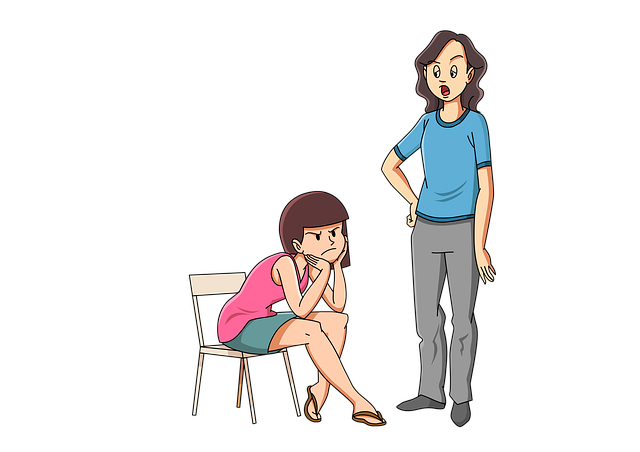
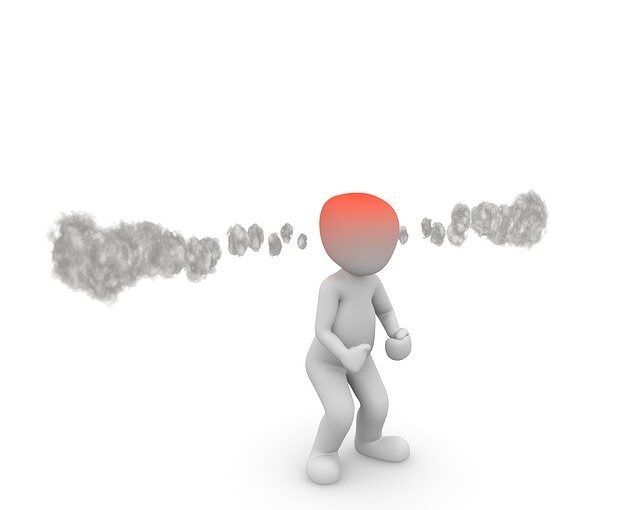
As we get near Valentine’s day, I want you to start noticing what your mind tells you is not working in your relationship.  Are you starting to feel like the moments when you’re feeling resentful in your relationship are increasing while the pleasant ones are coming fewer and farther between?  If so, the next step is to notice what you do when these resentments take over your behavior.  Do you become aggressive, passive, or passive aggressive when these resentments show up?  Are you starting to see your partner as a problem to solve?  As someone who needs some psychological fix?  As someone who is incapable of doing certain things that you like?  On those occasions, what do you notice happens to your interaction with your partner?  Are your ways of interacting or communicating helping you get into a more intimate relationship, or is it making your relationship more distant and problematic?

Secondly, remember that that problem-solving part of your mind is there for a good reason.  It wants to protect you from harm and help you get through challenges to your personal comfort.  The least it wants to happen is to keep you in a vulnerable state.  When it’s time to check your finances because you seem to be losing part of your savings, your problem-solving mind will tell you that you need to find out what’s wrong and what’s making your finances vulnerable to the changing conditions in your work or career.  If you are being attacked by a dog, your problem-solving mind will help you get out of that vulnerable situation and into safety.  If your partner is physically abusive and verbally threatening, then your problem-solving mind can help you find ways to escape such vulnerable situations or find help from the authorities. 

When it is our inner experiences that are involved though, our minds still treat our thoughts, emotions, urges, and physical sensations as external threats.  It’s part of the work that is done in therapy where people learn to recognize what is a mental or inner threat and what is an actual physical threat.  We can escape, fight, or surrender to a physical threat to stop the pain, but we cannot do the same to our inner experiences in order for them to go away, at least without severe consequences to our own vitality.  To paraphrase an expert, “Where are you gonna go where your thoughts, feelings, memories, and emotions don’t go?”  

Whether you’re celebrating Valentine’s day with a romantic partner, a parent, or some other loved one, the key to a connected and loving relationship is opening up to your more vulnerable feelings.  For those of you who are married, remember that your vows meant that you are opening yourself up to vulnerability.  No matter how perfect your partner may seem, he or she may suffer a debilitating disease or die anytime.  You are taking that step towards the risk of experiencing emotional pain, because love and vulnerability come in a package.  Vulnerability means you open up to the pain of possible loss, rejection, mistakes, and many others that come with what is called that state of being human by both you and your loved ones.   

Let me end with this quote from Ross White:

“Vulnerability is the price of admission for a vital and meaningful life.  If we are to be true to what is important to us, we will inevitably expose ourselves to some risk,” Ross White

Happy Valentine’s Day everyone!
Listen to this article on Spotify!  Click here!

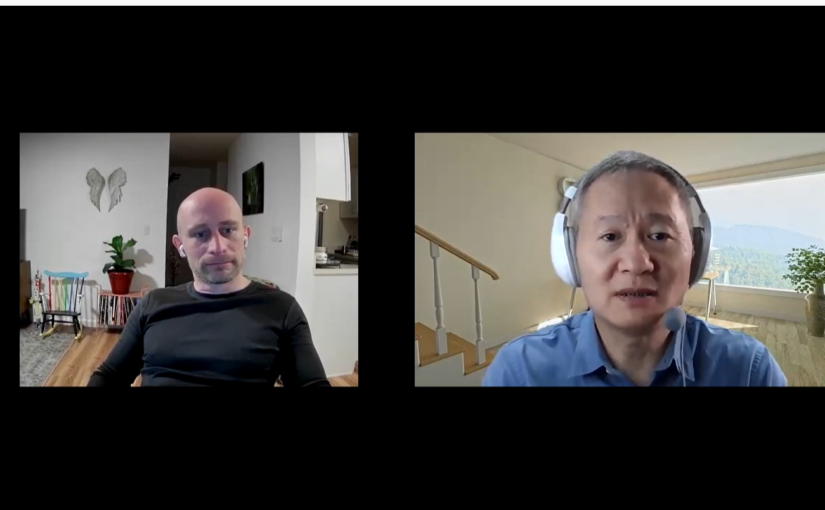
Interview Conducted with Dr. Matthieu Villatte!

Perhaps we are making Philippine history here!

Here’s a video of my interview with Matthieu Villatte, PhD who is an Assistant Professor at Bastyr University in Seattle, WA in the United States.

He obtained his doctoral degree in psychology in France, where he was trained as a clinical psychologist. He moved to the US in 2010 to complete a post-doctoral fellowship at the University of Nevada, Reno under the mentorship of Steven Hayes, PhD. 

Matthieu Villatte is the author of numerous books and chapters on mindfulness, acceptance, experiential therapies, and contextual behavioral science, such as the first manual published in French on Acceptance and Commitment Therapy and Mastering the Clinical Conversation: Language as Intervention, co-authored by Jennifer Villatte and Steven Hayes.

In the video, we talked about how the principles of behavioral therapy apply to everyday lives of people, the OFW or migrant worker phenomenon prevailing in the Philippines, as well as the pandemic!

Listen to the audio version on Spotify! Click here!

How to be a guide to your teenager

by Nathan Chua

Generation gap?  What happened to my baby?  I want the best for her but she seems to not understand!  He’s not listening to my words anymore.  She seems to spend more time in her room, on her phone than with us parents exactly when there are opportunities to connect and bond.  These are just some of the common problems I see from parents who, for the first time, are feeling like they have lost control over their teenage child.

One of my favorite metaphors to share with parents who struggle with their teenagers is that of a mother bird who has a few grown up chicks that are just about ready to fly out on their own.  Your teenager wants to take flight.  They will have some unsuccessful attempts and this is the time you could be seen by your child either as a teammate or a big obstacle.  

The teen years are like the toddler years.  They can be really challenging.  Remember how much you had to worry about your toddler hurting himself, or losing them in a mall?  Your teenager is no longer a child but not yet an adult, just as your toddler is no longer an infant but not yet able to walk without falling badly at times.  This can be a painful realization for the parents.  If there was separation anxiety for kids, I think this could be the closest thing to it that parents experience.  

One of the more frequent complaints I get from parents is that their kids are no longer listening to their admonitions and at times showing no fear of their sterner warnings.  In some cases, one parent plays the good cop and the other the bad one.  Not only does the conflict happen between the parents and the child, but also between the couple.  One resents playing the bad cop and the other resents the other for being the bad cop.  It’s quite a common issue for parents with kids, to disagree about how to parent.

But I get it.  Parents have all the good intentions to keep their kids from harm and get them to a brighter future.  The problem lies in the way they do it.  Dr. Darin Cairns has come up with an interesting metaphor on how to help your relationship with your teenager get better.  Dr. Cairns asks parents to choose if they wish to act as gatekeepers or guides. 

More often, parents perform the role of gatekeepers.  They determine for their children what they should or should not do.  Of course, there are certainly some things that parents would not want their kids to try, like crossing the street without a care about vehicles coming toward them.  Most of the time however, gatekeepers use rules of what to do or not to do for their kids without much of an explanation or giving the child a sense of some autonomy over their actions and choices.  Guides, on the other hand, are parents who validate their teens, allow them to make choices, and let them see for themselves the consequences of these choices.  

It doesn’t end there though, being a positive guide is also part of this equation.  By positive I don’t mean that everything should be happy and joyful.  This will give the impression to the child that it is bad to feel sad or anxious or angry or any of the unpleasant emotions.  By positive I mean that you should focus on asking your child to do things rather than telling them what not to do.  Why?  Because through this your child will not feel criticized and will take your guidance as an opportunity to learn new things and give them a sense of agency.    

Well, I am getting tired as I write this.  Suffice it to say that I completely empathize with parents of teenagers.  It is quite the chore but nonetheless it can be rewarding to be a guide and a friend to your teenager rather than a gatekeeper who is constantly on the lookout for what disaster your kid is up to now.  Haha!

Facing the New Year with Awareness, Courage, and Love

by Nathan Chua

The title of this post is not an original, at least the part that counts most.  Many times in my graduate studies, I had wondered what, bottomline, counseling was about.  I mean, what is it basically that we are trying to accomplish?  At some point in my graduate studies, I thought it was forgiveness.  It turns out that I will find an answer to this in my readings of Kevin Polk and his co-authors.  It’s about helping clients to become more aware, to act courageously, and to do so lovingly.

Let’s take them one at a time. 

Awareness:

Much of what we regret doing stems from acting in ways that are automatic.  How often have we seen people commit homicides in this country, only to see them realize that they had lost control over their actions for a split second?  There was even a case of a police officer who had a sterling record of service, who now has an indelible audiovisual account of him shooting a hapless middle-aged woman dead.  His promising career that took him years to build was upended by a brief moment of rage.

Awareness is a word that I often heard around the graduate classes I attended.  In ACT or Acceptance and Commitment Therapy, the word that is more often used to describe awareness is noticing.  For me, the gerund form makes it an active pursuit that we can do from moment to moment.  If we learn to practice noticing, then there’s a chance for a split second that the police officer I earlier mentioned would be able to choose more effective actions in that moment of rage.  It could have averted the loss of two lives.  One ended by a shot in the head, while the other was left to languish in prison.

Courage:

One thing ACT has taught me is that noticing is not just noticing or being aware of the difficult thoughts and feelings that we have.  It also involves noticing the rest of us.  By that I mean, we also notice other facets of the context that can move us in the direction of what is important to us in each moment.  Being a complete human being with all its history and complexity involves noticing that part of us that can move towards important ends.  

Over involvement in avoiding and controlling difficult inner experiences can lead us to tiring out of life and learning hopelessness is just around the corner anytime.  The peculiar thing about us is that we are capable of doing things that we don’t normally expect from ourselves when the stakes are high enough to respond in ways that go beyond our own urges to be self-protective.  We seem to be capable of running towards difficult inner experiences rather than run away when it matters.  That shy, unassuming classmate of yours can all of a sudden show up in the news being called a hero for saving a complete stranger from a burning car.  As Dr. Steven Hayes, the instigator of ACT, loves to say, “That’s just the kind of monkey we are.”  So we are capable of doing courageous, selfless acts.  It’s just built in.  It can resurface in our consciousness if we become more noticing.

Love:

And as we do those courageous acts, we are also capable of seeing the world from other people’s perspectives.  We are capable of empathy and acts of kindness in the face of challenging circumstances.  You, my readers, do it every day!  We can do inconvenient acts for the sake of someone we care for.  We come to the side of those who mourn.  We help out without anyone knowing.  We care for our kids even if it means sacrificing our own convenience.

That in a nutshell can sum up what we do in counseling.  Making us the whole human beings that we were meant to be based on how we were wired.  It’s not easy being human because we have a very handy tool that can also cause us much suffering.  The mind is there to do its job.  Objectively noticing that it is neither a boss nor an enemy makes a big difference.  We just need to learn to notice it doing its thing, face our fears and do things that matter anyway, and then do it with love and care for ourselves and others as well.  In other words, we are all capable of awareness, courage, and love, but sometimes we are not aware, or aware that we are not aware sometimes.  And this my friends, takes practice!   

Have a more noticing new year to come and thank you for coming to this place for the past 2021.

Listen to this post on Spotify! Click here!

Why some remain skeptical about counseling

by Nathan Chua

With the way many mainstream and social media entities have dealt with the topic of mental health, it may be surprising for some to know that therapy and counseling has yet to completely shake off the social stigma attached to seeking help for mental health problems.  Although the pandemic could have reduced some of the skepticism, there are still many who are adamant about their views.  I know some of you reading this will think, “Uh oh, here we go again, another article in defense of seeking professional help.”  Quite the contrary though, and sorry to disappoint you, but this post is more about taking a long hard look at what the profession has done to produce such skepticism.  Maybe it’s time to look inside our practices and see what our role is in contributing to this lack of confidence.  

In his book, “The Anatomy of an Epidemic,” author and journalist, Robert Whitaker talks about how drugs have been abused to treat otherwise well-functioning individuals who suffered serious albeit temporary mental problems.  As I have written before in a previous blog post, this is what Dr. Steven Hayes often refers to as the “DSMization” or biomedicalization of mental health care.  Dr. Hayes even encourages dropping the term, “mental health,” for something that is more attuned to what the current science is showing.  He suggests the use of mental resilience or mental skills instead.  In sum, the current approach of classifying people into categories and subcategories of disease has done more harm than good.  It has led to the abuse of medications that more often produce unnecessary and rather serious side effects.  I have written about this in a past blog post, so let’s turn now to the crux of what I want to share in this one.   

The second point which I want to emphasize for this post is what I heard Dr. Hayes said about our work in the helping profession that uses talking (or language) as a primary medium of change.  At the time I heard it, I couldn’t understand what he meant when he said that in our field of work, experience predicts confidence not competence.  I even took the time to post my difficulty understanding Dr. Hayes’ words in one of the social media groups I have belonged to since attending some workshops in the past.  I didn’t really find any of the comments to my posted question to hit the nail on the head.  Finally and luckily, I came across a podcast where Dr. Hayes himself explained what he meant.  

It’s pretty much like learning how to shoot the ball in the game of basketball.  Looking at how your shot went gives you the feedback you need to see how you can improve your shooting skills, or which shooting form works.  Yes, feedback!  Now can you imagine if you were shooting with a blindfold all along! 

In my first nine years of practice, I had followed what was mostly being taught in mainstream psychology here in the Philippines.  Of course, my clients eventually get better!  But better at what?  Well, mainly they had become better at reducing some of that anxiety, depression, etc.  The rule of thumb can be summed up this way, you are here for counseling because you need help in removing some of that difficult feeling inside in order for you to do whatever it is you want moving forward.

At times then I was wondering, do my clients really get better because of my work, or are they just recovering on their own over time?  The other side of it is, why are my clients coming back for sessions every time there is a new challenge in front of them?  Furthermore, with the approaches I had tried, I had to read up on so many books and enroll in so many training modules in order to address the myriad of cases presented to me!  I thought this feels quite like an impossible task!  Is there anyone who can master all of these protocols for every mental health concern?  Is that even human?

And of course I was getting good feedback, because clients do learn that these difficult emotions do have a shelf life!  And I had become their shoulder to cry on when things get rough once again!  So who’s the expert here?  

Even while I was in business, I was always looking for better stuff.  I remember in my 40s, I found myself hitting a ceiling with finding answers through my spiritual journey.  And as I pursued further studies in counseling, I hit another ceiling!  It felt like whatever I was doing, I could not attest to myself that these same methods I use with my clients do lead me to get past my own limitations!  

Now I am not saying here that I have reached some kind of perfection in terms of the way I deal with my personal struggles.  In fact, I am still learning up until this writing.  But in Contextual Behavioral Science (in general and Acceptance and Commitment Therapy in particular), I think I have found a place where there is a way past that final ceiling.  And guess what?  If there was something available out there that proves to me that I can find a science that can even be better than what is available in contextual behavioral science, I will take it!  Because what matters to me in my work is what actually works!  That is why I am now an ACT therapist and a functional contextualist!  I think it is by far the most scientifically sound approach and the one that will gradually take me through that hardest of all ceilings!  This is the fire that burns in me and the reason why I am passionate about sharing this with you!

Listen to this blog post on Spotify!  Click here!

After Infidelity

by Nathan Chua

What now?  Couples who have experienced a betrayal are often at a loss about what to do with the current state of affairs.  Yes, there will be the initial shock and anger and bickering.  At times, there might even be physical altercations.  No doubt a betrayal is the most common reason for couples to come to therapy and is also one of the most difficult problems to come out of.  

Many have been surprised to find out that the effects of infidelity can linger on for many years in spite of signs that the betrayed partner has already moved on.  In some cases, it can also happen that the betrayed partner is unable to acknowledge the painful memories that still cast a shadow on the relationship.  This may be for fear of revisiting old wounds and being labeled as unforgiving or being stuck in the past by the offending partner.  There are multiple aspects that need to be addressed in the aftermath of an affair.  I hope you find some hope in the tips I offer here on your road to recovery.     

For the offended party:

Tip 1:  You will very likely have flashbacks.  Flashbacks are different from memories as they signal to the person that the abuse is still occurring in the present.  Suspicions show up regularly.  On the other hand, a memory is simply a recollection of events from the past which does not necessarily have to be acted on or suppressed.  Betrayed partners, if the flashbacks last long enough, will begin to wonder if there is something wrong with them for being unable to move on from the hurt.  In fact, there are quite a number who have actually seen a doctor to get medication for their symptoms.  The drawback here is that even as these flashbacks are to be expected, many end up only getting temporary relief from the medication.  They now not only have to worry about the flashbacks, they also get concerned about the fact that they are still having them in spite of the medication.  Frequent fights that seem to come out of nowhere can result from the self-stigma that happens due to frequent failed attempts at suppressing painful memories. 

Tip 2:  Your partner, if they are sincere, will feel guilty about the transgression.  The more you attack them the more they would want to withdraw from the conversation.  Unfortunately, the more the offending party withdraws, the more the betrayed partner feels insecure and suspicious of the silence or the dismissive remarks.  This is the loop that couples end up experiencing because of their inability to cope in more effective ways.  

Tip 3:  Get in touch with your softer emotions that are normally hidden underneath all that anger and hatred.  Think about what you want to stand for at this moment.  Ask yourself,  “What would you like your kids to see in how you confront difficult situations such as these?  If you were being the person you want to be in these challenging times, what would you say to your spouse?”       

For the Offending Party:

Tip 1:  Realize that your partner has gone through a form of trauma as some experts would say.  Your partner is not doing this on purpose.  It is impossible to predict how long the effects will last on your partner.  Your partner will never be able to forget what happened but you can both start building new memories of warmth and compassion.  Your withdrawal will reflect coldness and a lack of sensitivity to someone that has been hurt very deeply.  

Tip 2:  Validate your partner’s feelings and avoid dismissive comments.  Validation does not mean you agree with what your partner is saying.  It is just a means to let your partner know that you understand what they are going through and will be there in times when the emotions become overwhelming for them.  

Tip 3:  The best way to react to such an unfortunate turn in your relationship is to be validating and reassuring.  Many offending partners have problems tolerating the mood shifts that come with a betrayal.  However the more impatient you get, the more your partner will suspect that you have yet to come clean.  

Is it time to leave?

My training in couples therapy has taught me that there needs to be certain conditions for a couple to remain together.  Of course, the default is always toward saving the relationship.  Infidelity is solely the responsibility of the offending partner but the relationship itself is the responsibility of both.  The betrayed partner is never to be blamed.  At this point, the only recourse available is to find ways to recover in more effective ways.

Many couples experience a regeneration in their relationship after a betrayal.  For one, with some help, couples can learn to treasure their relationship even more and not take things for granted.  Secondly, couples can also learn how to get out of their respective comfort zones in order to speak more openly with each other.  The things that they can learn in therapy can also serve them in the process of creating what some experts would refer to as marriage (or relationship) number two.  

In my years of working with couples who have suffered from the effects of an affair, I have learned that recovery can be summed up in an old prayer written by Reinhold Niebuhr, which I will paraphrase here:  When suffering and working through infidelity, it is important that we understand what is meant by having the serenity to accept the things we cannot change; having the courage to change the things we can change; and finally having the wisdom to know the difference.      

Listen to the podcast version of this blogpost on Spotify!  Click here!

Living with Purpose and Intent

by Nathan Chua

“Live as if you were to die tomorrow. Learn as if you were to live forever,”

Mahatma Gandhi

Have you come to a point in your life when you feel like as it says in the Bible, chasing after the wind?  Have you ever felt like every day has become a pointless pursuit of comfort and tranquility?  Has your life turned into an endless problem to solve?  You go from fixing one problem after another.  When’s the next challenge going to come?  Will I be able to surmount the bigger ones down the line?

If you have, don’t worry, you’re not alone.  I came from the same quagmire.  Early in my career, I started believing that life was about fulfilling a role of being around to be the problem solver.  Furthermore, I had learned from my history that the secret to the good life is the comfortable life.  One in which I can be the great problem solver, conquering one obstacle at a time until there remain only the easier ones.  I dreamt of eventually coasting along as I moved into old age.

I lived that way for the first 20 years of my working life.  People around me would notice how I looked then.  I often carried a tired and angry expression on my face; always on alert for the next challenge that comes my way.  I was the hero who was always ready to come to the rescue.   

To borrow a metaphor I saw in a YouTube video, you can view a rabbit running across from a window, but you wouldn’t know if that rabbit was going for a carrot or running away from a predator.  I was like that rabbit that people saw from a window.  One couldn’t tell if I was in business because I simply enjoyed doing it or if I was doing it to avoid the shame that comes if I had failed in business.  For those who are new here, I spent the first 20 years of my career as a businessman.  A failure in business meant I had failed my family.  

You would probably understand why I often looked tired and angry.  Tired because life has become a struggle and angry because I didn’t see any end in sight.  Life was sending me challenge after challenge to surmount.  Like the rabbit running away from a predator that eventually tires out, I was exhausted escaping from the jaws of my shaming, “Whatever happens, don’t be a failure,” thoughts.  

One day I woke up and started noticing the hamster wheel I was on.  It was as if I was living backwards.  Like some of what I learned in psychodynamic therapy, I lived hoping to come back to the safety of my mother’s womb, wishing to get back to that fetal position of a tranquil life.

That tranquil life turns out to be a mirage.  No matter how much we try to avoid it, life has its challenges and running away from the feelings and thoughts that these challenges come with, is like becoming a rabbit that spends most of its time fleeing a predator, although in my case the predator is my own worst fears.

You and I can pivot towards a life in pursuit of what truly matters to us.  Rabbits run away from life-threatening circumstances.  We humans though can run away from our thoughts and not just actual threats to our safety.  It only takes the rabbit to notice when the noise behind the bushes was just a gust of wind to make it go and pursue food or a mate.  Although it is difficult, we can start to make changes in our life directions by noticing if we are spending much of our energies running away from our unpleasant internal experiences, or if we are pursuing the qualities of being and living that matter to us.

The happy rabbit is the one that pursues nourishment and the possibility of a mate.  Take it from there, are you willing to start pursuing the rich and meaningful life, even if it means that your fearful inner experiences will become more evident as you go.  Maybe that’s what Gandhi meant in his words.  His life was mostly about pursuing something that was good and noble, rather than about running away from the dangers his mind reminded him of.  He pursued the irrational move to expose himself to the dangers of a life spent for the welfare of others, and paid the ultimate price.  Nonetheless, he lived, not the tranquil life, but the meaningful one.  He is the quintessential rabbit moving in the direction of what he wanted to do with his time…every single minute.

Listen to this blogpost on Spotify!  Click here!

Getting Hooked by Angry Thoughts!

by Nathan Chua

If you are old enough to watch the daily news or get regular updates online through social media platforms, you would be familiar with the all too common sights of road rage or someone who had just lost his or her temper and did something that was captured on a phone camera.  We have seen how people do things that they would never have even dreamt about in reaction to their angry thoughts and feelings.  How many times have we seen previously law-abiding citizens commit heinous acts and then later on regret what they had done when it was too late.  In Acceptance and Commitment Therapy (ACT), the term used to describe this process of fusing with thoughts is “getting hooked.”  Fusing with thoughts means our thoughts dictate what we do.   

Yes, I should have seen it coming!  It was in late September this year that I realized I had to re-register to vote.  For those who are not from the Philippines, the background is about being automatically delisted as a voter if one has missed voting in two consecutive elections.  I had thought all along that I had just missed one midterm election, but only to realize accidentally when I came upon a Facebook post that assessed my eligibility as a voter in late September, that I had missed voting in a small town (barangay) election that was held one year before the midterm elections.  Of course, that induced some panic in me when I recalled online videos showing the horribly long queues of people lining up in the midst of a pandemic to register before the deadline set by the end of September!  As I attempted to find ways to register where there were shorter lines and found out how tough it was to navigate the government website to print out the necessary forms, I realized that this will take a herculean effort.  Sacrificing a day of productive work just to register as a voter was not exactly what I had envisioned for what is supposedly a democratic country where the right to vote is protected, facilitated, or made as easy as possible.  

To cut the story short, I finally ended up having to deal with getting requirements to register all over again.  And true enough, I felt the process was disproportionately tedious for the simple act of voting.  Upon completing my documents I set out to register only to be told rather nonchalantly that my documents were unacceptable!  You can just imagine how frustrating that could be after you had braved the long lines and a pandemic just to register.  

I eventually got into a heated argument with the two people in charge of checking my documents.  It took me about five minutes to realize that I had gotten hooked by my angry thoughts!  Upon noticing what I had been doing, I quickly apologized for my behavior.  It was not the person I wanted to be in that moment, and not the way I wanted to handle the situation.  As you can see you are not alone in struggling with your anger.  Even counselors like me can get hooked!  

Here are other examples of getting hooked by our thoughts:   

  • Have you ever had an experience when you were having a dinner conversation with someone important only to realize that you missed half the conversation?  
  • Have you ever played with your child and all of a sudden noticed that your toddler is just about to fall off the crib?  
  • Or drove all the way to work and didn’t know how you got there or which route you took?  
  • Have you ever come home after someone tried to steal your bag during your walk?  Once you arrive to your family, you would probably be talking about this experience with them for hours and even days.  The experience can get you off your normal routines at home.

All of these involve something grabbing your attention and our minds start giving us reasons for not playing with our kids or hugging our partner.  In other words, your world stops in those moments.  You become less of the kind, loving, and caring person you used to be.   

In my case, with all the bureaucratic requirements I had to go through, I was hooked by the thought that the government is bad.  Hence, I felt physically tense the minute I went into the registration site.  I failed to notice this and went about the business of registering not ready for any possible frustration that might come my way. 

In hindsight, I was already hooked even before the challenging situation happened!  It’s hard to recognize a hook until we notice that biting the hook has brought us in a different direction!  This process of unhooking from our thoughts is based on what Dr. Steven Hayes explains as looking at our thoughts rather than looking from our thoughts.  The original name for ACT was comprehensive distancing, which means distancing from the thoughts that our minds give us, so our thoughts don’t dictate what we do.   

The first step in being able to distance ourselves from our thoughts is to be more noticing.    

On that afternoon at the voter registration facility, I got hooked!  I noticed only about five minutes into my ranting and quickly made amends to my ways.  Some damage had already been done though and my thoughts began to run wild with shaming accusations that I am just not a good enough person, much less a counselor.  

Well, here’s what ACT has to say about that too.  We will get hooked no matter how hard we try to be more noticing, for we are only human.  What doesn’t change though is that little voice in our heads that reminds us of what we want to be about in each and every moment.  Realize that and ask ourselves after getting hooked, “Has anything that was important to us changed?”  Perhaps not.  Every time we fall into not noticing, we can always get up again and do our best in moving towards the person we want to be and the life we want to live.  

Listen to this blogpost on Spotify! Click here!