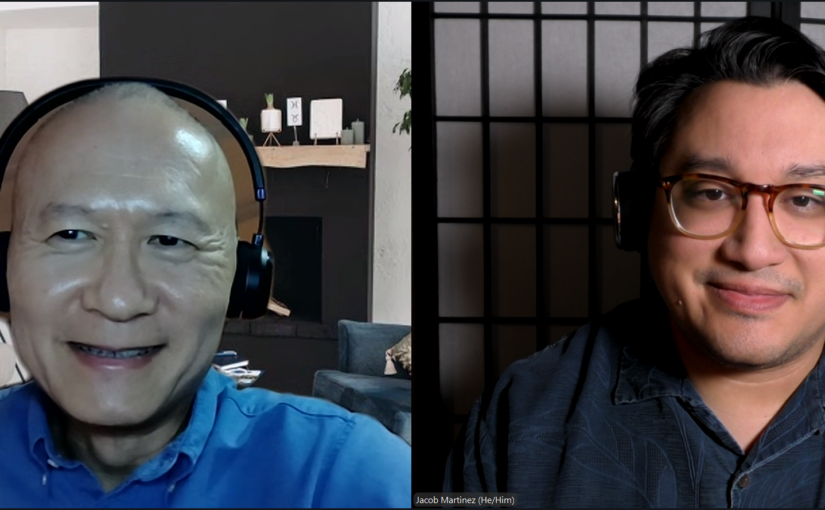
I was recently invited by Jacob Martinez, a licensed professional counselor from Wisconsin, to contribute to an international ACT training series in collaboration with PESI.
For many years, I’ve been on the other side of these trainings—as a participant, learning from international clinicians and trying to make sense of how these ideas apply in real-world settings.
This invitation marks a meaningful shift for me: from learning within that space to contributing to it.
In this 45-minute segment, I discuss a core distinction in contextual behavioral science:
Functional coherence vs essential coherence.
In simple terms:
Essential coherence asks: “Is this true? What is this really?”
Functional coherence asks: “Does this work? What does this lead to?”
Most of us—including many clinicians—are trained to think in essential terms: labels, traits, diagnoses, and fixed explanations about “what a person is.”
ACT takes a different approach.
Instead of focusing on what thoughts or emotions are, it focuses on what they do—how they function in context, and whether they help a person move toward a meaningful and workable life.
This shift may seem subtle, but it has wide implications—not just for therapy, but for how we understand relationships, culture, and social issues.
I’m sharing this here in the hope of making these ideas more accessible, especially within the Filipino context, where moral and label-based thinking are often emphasized.
Because the real shift is not just learning new techniques.
It’s learning to see behavior differently.
▶️ Watch the full 45-minute training here:
https://spotifycreators-web.app.link/e/bZHvvPXmV1b