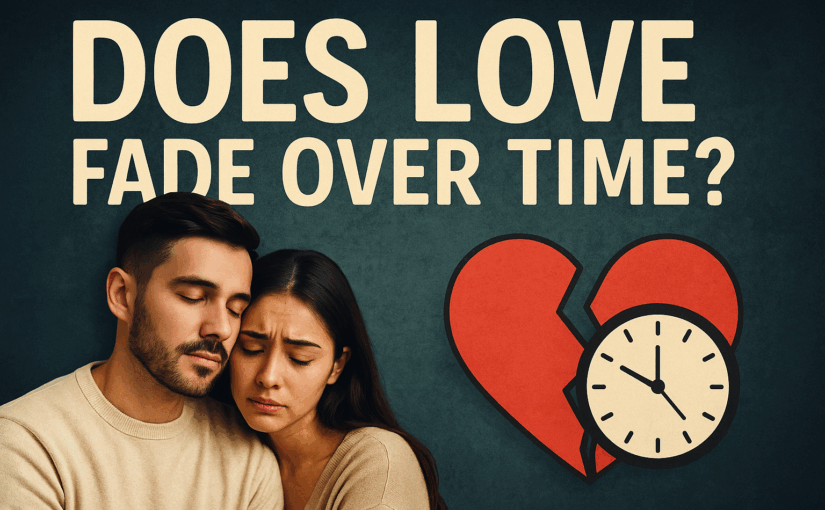
Does Love Fade Over Time? When we fall in love, everything feels effortless. Our partner brings out the best in us — we’re patient, kind, curious, alive. But as time passes, that same love can turn into frustration, distance, or even hate. So what really changes? Is it the person — or the context we’ve built together? In this video, Nathaniel Chua, counselor and founder of One Life Only Counseling Services, explores how love evolves through time from a contextual behavioral lens (ACT and IBCT). You’ll learn: 💡 Why relationships start in limerence — when our brains reward novelty and connection. 💡 How old learning histories, fears, and unmet needs begin shaping our interactions. 💡 Why partners don’t just have traits — they are contexts that bring out certain behaviors in each other. 💡 How love fades not because chemistry disappears, but because the environment that sustained it stops being nurtured. And most of all, how we can begin to rebuild that environment — through awareness, kindness, and values-based action. ❤️ Love isn’t what you feel. It’s what you keep creating together. 🎧 Listen or watch on: One Life Only Counseling Services #OneLifeOnlyCounseling NathanielChua ACTtherapy IBCT FunctionalContextualism LoveAndRelationships WhyLoveFades RelationshipHealing ContextMatters PsychologicalFlexibility TherapyPhilippines MentalHealthAwareness AcceptanceAndCommitmentTherapy ValuesBasedLiving CouplesTherapy EmotionalIntelligence Limerence #fyp#foryou#counselingphilippines#PsychologyVlog#counseling#onelifeonlycounseling
Is your partner really a narcissist — or are both of you caught in a context that rewards control over connection? 💭 Let’s shift the question from “Who’s the problem?” to “What’s the pattern we’re stuck in?” That’s where real healing starts. 🌿 NarcissistOrContext #OneLifeOnlyCounseling NathanielChua ACTtherapy IBCT RelationshipTips MentalHealthAwareness ContextualView TherapyPhilippines PsychFlexibility SelfAwareness#fyp#foryou#counselingphilippines#PsychologyVlog#counseling#onelifeonlycounseling
How to Make Wiser Choices…A Mental Health Month Exercise What do you do when your mind pulls you in two directions — between what you should do and what you want to do? In this Mental Health Month reflection, therapist Nathaniel Chua from One Life Only Counseling Services shares a simple yet powerful ACT-based exercise that helps you pause, notice old survival rules, and choose from your values instead of your fears. Through the Two Truths Practice, you’ll learn how to: ✅ Recognize the “fight, flight, freeze” rules that still shape your reactions. ✅ Make peace with both sides of yourself — the fearful and the brave. ✅ Use your inner GPS (your values) to make wiser choices in life. True mental health isn’t about erasing struggle — it’s about creating space to live meaningfully, even with it. 💬 Try the exercise: 1️⃣ Name both sides of your inner conflict. 2️⃣ Validate both — they each want something good for you. 3️⃣ Let your values guide your next small step. If this message resonates with you, don’t forget to like, share, and subscribe for more reflections that combine psychology, compassion, and everyday wisdom. #OneLifeOnlyCounseling MentalHealthMonth ACTtherapy PsychologicalFlexibility SelfAcceptance ValuesBasedLiving MindfulnessPractice InnerPeace TherapyPhilippines NathanielChua MentalHealthAwareness SelfGrowth AcceptanceAndCommitmentTherapy FunctionalContextualism#fyp#foryou#counselingphilippines#PsychologyVlog#counseling#onelifeonlycounseling
What should you do if you’ve been cheated on? Infidelity is one of the hardest challenges a couple can face. The pain is real, but it doesn’t always have to mean the end of the relationship. In this video, I share how Integrative Behavioral Couple Therapy (IBCT) helps betrayed partners face infidelity with honesty, courage, and compassion. We’ll talk about: Why acceptance is the first step to healing How to express painful emotions without escalating conflict Why tolerance is essential for both partners The complex issue of whether to ask for graphic details — and how the function of that request (trust-building, punishment, avoidance, or control) shapes healing The truth is: there are no one-size-fits-all rules. Every couple is unique. Trust isn’t rebuilt by following blanket advice, but by finding what helps your relationship move toward healing and reconnection. If you’ve been betrayed, this message is for you: even in the midst of pain, there can still be a path forward. — 📌 Subscribe for more therapy insights and relationship guidance 📌 Learn more about my counseling practice: onelifeonly.net BeenCheatedOn InfidelityRecovery RelationshipHealing MarriageHelp CouplesTherapy IBCT OvercomingInfidelity RebuildingTrust RelationshipAdvice TherapyInsights #OneLifeOnlyCounseling#fyp#foryou#counselingphilippines#counseling#PsychologyVlog#onelifeonlycounseling
What to do when you’ve cheated on your partner What do you do if you’ve cheated on your partner? Infidelity is painful, but it doesn’t always mean the end of a relationship. In this video, I share how Integrative Behavioral Couple Therapy (IBCT) helps couples face betrayal with honesty, responsibility, and compassion — turning a crisis into a chance for deeper connection. For more information, please visit www.onelifeonly.net InfidelityRecovery CheatingInRelationships MarriageHelp CouplesTherapy IBCT RelationshipHealing TherapyInsights OvercomingInfidelity RelationshipAdvice #OneLifeOnlyCounseling MarriageCounseling #fyp#foryou#counselingphilippines#counseling#onelifeonlycounseling#PsychologyVlog
What’s the best way to build confidence? Most of us are told to “think positive,” repeat affirmations like “I am strong, I am confident,” or wait until we feel ready. But does it really work? In this video, I share a different, counterintuitive approach. Drawing from my work as a counselor and insights from behavioral science, I’ll show you why confidence isn’t something you wait for or force with pep talks. Instead, it’s something you build by admitting your non-confidence — and taking action anyway. If you’ve ever struggled with self-doubt, fear, or that nagging thought that you’re “not enough,” this vlog is for you. 👉 Watch until the end for the surprising truth about where genuine confidence really comes from. — 📌 Subscribe for more counseling insights and mental health reflections 📌 Learn more about my practice: onelifeonly.net — BuildConfidence ConfidenceTips OvercomeFear Motivation TherapyInsights ACTTherapy RelationalFrameTheory SelfImprovement MindsetShift #OneLifeOnlyCounseling#counseling#counselingphilippines#PsychologyVlog#onelifeonlycounseling#counseling#counselingphilippines#fyp#foryou
What I learned when I disappoint clients As therapists, we all face moments when clients feel disappointed in us. In this vlog, I explore why that happens — drawing on Acceptance and Commitment Therapy (ACT), insights from Russ Harris, Relational Frame Theory (RFT), and a moving story shared by Steven C. Hayes. Whether you’re a counselor, psychologist, or simply curious about the challenges of therapy, this reflection will help you see how resistance, counter-compliance, and disappointment can actually open the door to growth and values-based change. TherapyInsights ACTTherapy RelationalFrameTheory RussHarris StevenCHayes AcceptanceAndCommitmentTherapy CounselingJourney TherapistLife CouplesTherapy #PsychologyVlog#onelifeonlycounseling#counseling#counselingphilippines#fyp#foryou
“Hi, this is Nathan again. Today I want to answer a simple but important question: How does humor actually help couples? I’ll be sharing from the lens of Integrative Behavioral Couple Therapy, or IBCT.”
“One of IBCT’s goals is what we call unified detachment. Instead of blaming each other, couples step back and look at the problem together — like scientists observing a pattern.
Humor is one of the best ways to do this. When couples laugh at how predictable their fights are, the problem becomes something they face together, not something that divides them.
For example, instead of saying, ‘You’re always late, you don’t care about me,’ one partner might joke, ‘If lateness were an Olympic sport, you’d win gold.’
That moment of laughter changes the energy. Suddenly, it’s not me versus you — it’s us versus this quirky pattern.”
“Second, humor reduces defensiveness. Couples can get stuck in cycles of criticism and withdrawal. A light, well-timed comment can soften the tone and break the cycle before it escalates.
It’s like putting a pin in a balloon before it bursts. Humor diffuses the tension so the conversation can continue in a gentler way.”
“Third, humor helps with acceptance. In IBCT, we encourage couples to not just push for change, but to also accept differences with warmth.
For example, instead of demanding, ‘Stop worrying so much,’ a partner might smile and say, ‘If worrying burned calories, you’d be the fittest person alive.’
That’s not an insult — it’s a playful way of saying, ‘This is how you are sometimes, and I see it with love.’
Humor makes quirks feel more tolerable, more human.”
“And lastly, humor strengthens intimacy. Shared laughter creates bonding. It reminds couples, ‘Hey, we’re in this together.’
In IBCT terms, it turns recurring struggles into part of their unique story, not proof that they’re incompatible. That sense of togetherness makes it easier to work on change later, because the bond feels strong.”
“So, to summarize, from an IBCT perspective, humor helps couples by:
1. Helping them see problems as ours, not yours.
2. Reducing defensiveness.
3. Opening the door to acceptance.
4. Strengthening intimacy and bonding.
Of course, the key is that humor must be gentle and shared — laughing with, not laughing at. Used wisely, humor is one of the most powerful tools to bring couples closer together.
Thanks for watching. If you found this helpful, feel free to share it with someone who could use a little lightness in their relationship.”
ACT at the Movie! Shawshank Redemption Welcome to ACT at the Movies. This is a series where we take some of the world’s most memorable films and look at them through the lens of Acceptance and Commitment Therapy—or ACT for short. Now, just a quick caveat: I’m not saying these movies were written with ACT in mind. But what ACT offers us is a scientific framework—a way of understanding resilience, meaning, and growth—that shows up in the stories we love. Movies capture the struggles and choices that make us human. ACT helps us see the science behind why those struggles matter, and how people find the strength to move forward. So grab your popcorn, and let’s dive in. #onelifeonlycounseling#counselingphilippines#counseling#fyp#foryou
This is a series where we take some of the world’s most memorable films and look at them through the lens of Acceptance and Commitment Therapy—or ACT for short.
Now, just a quick caveat: I’m not saying these movies were written with ACT in mind. But what ACT offers us is a scientific framework—a way of understanding resilience, meaning, and growth—that shows up in the stories we love.
Movies capture the struggles and choices that make us human. ACT helps us see the science behind why those struggles matter, and how people find the strength to move forward.
So grab your popcorn, and let’s dive in.
Before I begin, let me make a quick caveat. I’m not here to say that the writers, directors, or actors of The Shawshank Redemption were in any way informed by Acceptance and Commitment Therapy—or ACT. Rather, what I want to share is how ACT, as a scientific model of therapy, gives us a framework to understand something timeless: human resilience.
The Shawshank Redemption is often remembered for hope. “Hope is a good thing, maybe the best of things,” as Andy says. But when we look through the ACT lens, what we actually see are processes of psychological flexibility—the capacity to stay present, open up to difficult emotions, and move toward what matters, even in the hardest of circumstances.
Acceptance & Willingness Andy is wrongly imprisoned, and his suffering is immense. A purely control-based strategy—fighting, resisting, shutting down—could have consumed him. Instead, he embodies acceptance. He allows the pain of his situation to be there, while still choosing to act with dignity and purpose.
This doesn’t mean approval or passivity. Acceptance in ACT means dropping the struggle with emotions we can’t eliminate, and instead putting energy into what we can build.
Values as Compass Andy’s values are freedom, justice, and friendship. Those values guide him through years of confinement. His work in the library, his mentorship of Tommy, his efforts to bring dignity to the prisoners—all of these flow from what matters to him most.
ACT teaches us that when life narrows, values can open a path forward. Even in a prison cell, Andy lives by a compass bigger than his circumstances.
Defusion from Thoughts Red, Andy’s closest friend, often voices thoughts of despair: “Hope is a dangerous thing. It can drive a man insane.” Those are believable, sticky thoughts, especially in prison. Yet ACT invites us to notice thoughts as thoughts—not literal truths that must dictate our actions.
Andy doesn’t deny the despair, but he doesn’t fuse with it either. He chooses to hold hope lightly, and act on it, rather than be consumed by thoughts of hopelessness.
Committed Action The most iconic example: Andy’s years of digging through the prison wall. He doesn’t know when—or if—he will succeed. But each day, with patience and persistence, he takes committed action aligned with his values. That’s psychological flexibility in practice: consistent steps, even when outcomes are uncertain.
One of the most powerful but often overlooked parts of Andy’s story is how he responds to sexual abuse in prison. The film doesn’t sensationalize it, but it shows us enough to know that Andy suffered deeply at the hands of others.
What stands out is that he doesn’t let this experience define him. He doesn’t collapse into despair, he doesn’t wallow in self-pity, and he doesn’t passively allow the abuse to strip away his dignity. Instead, Andy keeps moving. He resists where he can, he protects his sense of self, and he continues to build toward freedom.
From an ACT perspective, this is a striking example of committed action. The pain was real, the trauma was real, but Andy chose not to let it dictate the direction of his life. He kept moving toward his values—dignity, freedom, and hope—even in the harshest of conditions.
That’s the heart of psychological flexibility: not the absence of suffering, but the courage to keep walking toward what matters, even in the darkest circumstances.
Closing Reflection So when we look at The Shawshank Redemption through the lens of ACT, we see a scientific framework for resilience. Acceptance of pain. Defusion from despairing thoughts. Values as a compass. Committed action, step by step, toward freedom.
It’s not that Andy or Red were “ACT-informed.” But ACT helps us understand why their story resonates so deeply: it reflects universal processes of human growth and survival.
If you enjoyed this reflection, I’ll be doing more short talks on ACT and movies—exploring how science and storytelling come together to show us what resilience looks like. Thanks for watching.