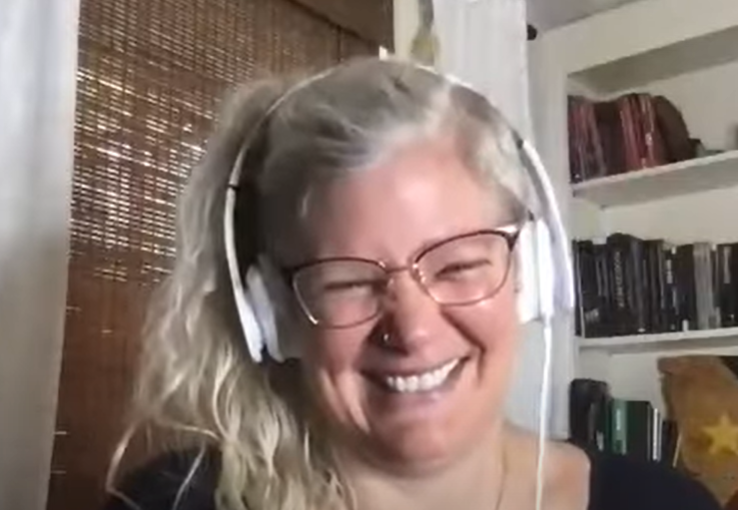
Had an interesting conversation with Julius Babao and Christine Bersola-Babao, October 25, 2023!
Watch it on YouTube below:
One Life Only Counseling Services
Counseling for Individuals, Couples, and Families

Had an interesting conversation with Julius Babao and Christine Bersola-Babao, October 25, 2023!
Watch it on YouTube below:
If you prefer to listen to this video interview, you can click the play button below:
This is the second offering of our Two Shrinks Over Drinks series. This time we have a friend, who’s also a doctor and co-author of a book entitled, “Mastering the Clinical Conversation: Language as Intervention.”
Here you get another chance to eavesdrop on two MORE shrinks caught in a casual conversation. If you have ever wondered what it is like to listen to a couple of psychologists/counselors talk over a drink, well, here’s your chance!
We talk about a myriad of topics and it took two hours to do! In fact, this could have been topics that are fit for a whole day’s chatter!
So this will be the first part wherein we talk about:
– Dr. Villatte’s ACT story
– Philosophical framework in counseling or psychotherapy
– What Skinner referred to when he wrote about a pre-scientific way of explaining human behavior
– What we mean by an approach that has precision, depth, and scope; how this can affect the way therapists choose their approach or models of therapy, and how this can assist clients make decisions on the kind of therapy they want

by Nathan Chua
No, you’re not. You are called by a name, and I don’t think your parents or guardians would name you, “Depressed!” Yes, this is kind of a play on words, but it can also serve as a reminder to you that your depression doesn’t define you. I have met a good number of clients who have come to me saying that they have been diagnosed with major depression and subsequently medicated for something they are supposed to have that causes the depression…some sort of brain disease. It no longer surprises me when clients come to me and say that they had a chat with their provider for 15 minutes and voila, they are labeled as being stricken by something that is called major depressive disorder or MDD! Sad to say you’re broken and you need some fixin’!
These conclusions are made in the service of a manual that says someone has a problem with depression when it lasts for a couple of weeks or more, plus a few other criteria listed. Most people who get such a diagnosis often end up feeling like they have very little control over their choices regarding how they want to spend their time. Much of their time from thereon will be focused entirely on getting rid of this depression. They begin to adjust their lives and expectations about their lives and their relationships around a diagnosis. People have to be careful about my feelings. They shouldn’t say anything that can trigger my depression or sense of self-worth. All of a sudden a mask is worn throughout their remaining existence.
A few words about our sadness:
I have recently shared this thought experiment about our sad feelings. It speaks about how understandable our negative feelings are. If you were in a funeral wake to visit the friends and loved ones of the departed, wouldn’t you be surprised if anyone came in without at least a tinge of sadness in their face? If you lost someone you cared for, would you think you’re abnormal for feeling sad? Wouldn’t you once in a while even after years following the death of a loved one, still feel a sadness that comes with a reminder of the person who once meant so much to you? Wouldn’t that be about just being a person who has feelings? And yet we have a system or a culture that says you only have a couple of weeks to get over your sadness.
The loop:
I remember an expert sharing that depression as we interpret it today, is not about the presence of sadness, but the unwillingness to feel sadness. The loop happens when you and I try to get rid of our feelings of sadness. This can come in many different forms. We may try to distract ourselves, opt out of activities we enjoy, ruminate about the guilt and the what ifs, and some of us even take substances. The sad news is unless you have a major brain injury or you are close to that age when you get hit by Alzheimer’s, you will experience sadness sooner or later. No amount of avoiding can help you on your way to being unable to feel. Take it from me, there are times I wake up feeling sad for no particular reason at all. That’s just the case about feelings. They visit us once in a while and they come and go of their own accord.
In short, the loop kind of looks like this, you don’t only feel sad, but also feel sad that you are sad.
It’s not what you are, it’s something you have:
You are not a walking depression. You can just observe. Take a full day without any medication and see if you will feel sad 24 hours non stop. Chances are you will find that your sadness only visits you in spurts. And when it is a longer spurt, chances are you are trying to suppress it. The problem with that strategy is that the more you try to forget about your sadness, the more you remember. Because trying to forget something only reminds you of what you have to forget!
The meaning behind the sadness:
Finally, this article won’t be complete without some kind of redemption. If our sadness were meaningless then I would be first to recommend that all of us should find ways to escape it. For example, if you were being physically or verbally abused by a partner or a guardian, this is needless pain that all of us can and should avoid. But the kind of sadness I speak about here does stand for something. Our sadness means we have lost something or someone of great value to us. We have sad feelings for a reason. We are sad for the loss of a loved one because…we loved them! If our sadness stood for something as life-changing and powerful as love, then why should we be ashamed of it?
I remember an author and psychologist mention that we have tears come out of our eyes because they were meant to be seen. I often say this to my clients, your tears today tell me something about you that any form of running away from or medicating your way out of your sadness cannot. They tell me something about you that makes me feel connected to you. You’re just as human as I am.
So next time you lose someone or something that matters to you, take a moment and look at the other side of the coin. This moment is precious because your sad feelings tell you you have lost someone precious. And for you to feel the pain of the loss, is the essence of why it is both difficult and a privilege to be part of the human species.
by Nathan Chua

“…for better, for worse, for richer, for poorer, in sickness and in health, to love and to cherish…”
This is for all the June brides and grooms out there!
When we hear this vow at wedding ceremonies, some of us can’t help but sense the daunting task ahead for the couple. However, what’s lost in these words involves one of the main reasons why couples don’t end up fulfilling these promises: context or changes in the couple’s contexts. Many marriages end not in particularly distressing times. I don’t have the data on this, but just by my experience in working with couples, the best of times do not shield a relationship from conflicts that may lead to separation or an unhappy co-existence.
Some changes in context come in the form of challenges to their dreams of what constitutes a happy marriage, or the rules that they thought would be followed faithfully. For better, for worse, for richer, for poorer, in sickness and in health, all describe a context wherein couples commit to standing their ground and being with each other in the most trying times. These are changes in context that are descriptive of major crises that heighten the solemnity of the event. Perhaps few couples realize that the moments when there are no crises can also set their course. Maybe an in-law is coming for an unwanted visit, a child is having trouble at school, a car breaks down and a daily routine drive is disrupted. Mundane as they seem, couples who are different, will want to handle these situations differently. Ergo, we hear one of the most perplexing yet tragic complaints from couples. Their fights seem to come from nowhere. Trivial matters become issues that make or break the relationship.
We all operate differently depending on the context. I know I write better when I am in a secluded, well-lit, and quiet place. You may work better when you hear white noise from your favorite mini-component stereo system. Can you imagine how a young couple sharing a small space has to deal with the potential conflict in the context of important deadlines? In other words, there is a confluence of stressful events.
Let’s take another example of a young professional who came to like a partner who was highly responsible and hardworking as they were dating. The eventual boyfriend who she ends up marrying, was very prompt on their dates but could only devote one night a week for a date. She liked that about him as her previous boyfriend was usually just hanging around her, sleeping on the couch and occasionally, shooting drugs. In the dating context, this new guy was an oasis. That context however, changes when they begin to chart their course as a married couple. All of a sudden, that once a week date feels like a concession. The boyfriend and now husband is not addicted to drugs but addicted to work! It’s now the couch surfing boyfriend that’s the oasis. Well, at least he was present most of the time. Another example is a partner you married or committed to because he was very close and loving to his family. I remember some sayings that mothers would usually advise their daughters that however their boyfriends treat their mothers, is the way they can expect to be treated as wives. In fact, your boyfriend was so close to his mom and family, he wanted you to all live in one place. You know where this is going.
So here’s my tip for all of you June brides (or grooms) out there. Be aware that any positive quality about anything, which includes your fiance (fiancee), has a flipside not a darkside. Take social media for instance. They have a flipside depending on usage. Your partner’s most likable qualities have a flipside depending on where you are in your matrimonial odyssey together. To put it simply, not all qualities are likable in all contexts. The trick is to be aware of this and see how you can handle your differences effectively. Remember that wedding vow represents not just your contexts in crises situations, but also your everyday ones. So be more conscious of your everyday wedding vows to avert self-inflicted crises.

by Nathan Chua
I am no expert movie analyst or critic, so pardon me if I dwell into an unfamiliar topic for me. I recently saw the movie that won several major awards at the Oscars this year which featured a character named Waymond. I could not help but smile when I heard Evelyn (the name of the character who is his wife in the film) express her disbelief that her husband had just turned into some kind of superhero by saying to Waymond, “You? With the fanny pack?” There are now two movie characters portrayed that I can count as my all-time favorites. The other one is Forrest Gump, a character played by Tom Hanks in a film released in the 1990s.
My guess is that I am not alone in this. Key Huy Kuan who played Waymond, won best supporting actor for his role, and Forrest Gump the movie as I remember, did really well at the tills as well as the Oscars of that time. From memory, I think Forrest Gump’s success at the box office was unexpected, since most movies that did well financially up to that point were sci-fi or superhero movies. I guess the stories and message of these characters don’t go unnoticed by the public and the experts. They resonate to us in an odd way. They have something that they don’t have. So to speak.
Although I am quite sure that there are many other movies that depict such unlikely heroes, these two are for me, the most inspiring. Having been in business, I couldn’t quite understand back in the 90s why a character like Forrest Gump would make me feel so much admiration towards someone who was supposed to be just existing to survive. Since learning more about the workings of the mind from an ACT (Acceptance and Commitment Therapy) perspective, I have discovered what it is that made me gravitate to Waymond and Forrest.
There is one thing they don’t have that I have that makes them such admirable characters. It’s an ego.
Let’s do a thought experiment here:
We love our dogs. Ever wondered why? Since I work with couples a lot, I’d like to use this metaphor. If you have seen a male dog get snarly when its mate has gone off with another male dog, that’s part of their mating instinct. When the mate comes back to it or if the male dog has successfully fended off the competing male, then the couple can just go on being with each other without much of a fuss. It’s as if nothing had happened. With human couples though, it takes more time to get back to the usual interactions. We humans have a real handicap when it comes to being present with our lot in life. Any couple going through recovery from a transgression can admit that their thoughts can make them do things that don’t match the situation. They can be fast asleep and start a major fracas in bed even though they know they have important matters to take care of when the sun rises.
Another example would be if you forgot to feed your dog at the usual time. Guess what your dog will do when you finally present it with dinner? Will it snarl to show anger and frustration that you took your pet for granted? On the contrary, your dog will be extremely happy and grateful to you just hearing the familiar noises that come with dinner. Try noticing what happens if you forgot to prepare dinner for your spouse or kids. You could get an earful and maybe a night full of grumblings.
End of thought experiment.
There are subtle ways we project our egos. We can start noticing what image we want to present to the people we meet. Here’s one that may sound familiar: While you come a bit late to a party, you tell the people who welcome you about how busy you were with so many business meetings. Get it?
Waymond and Forrest are lovable characters because they just lived according to what is closest to their hearts and available to their senses:
For Forrest, it was his love for Jenny and Bubba, as well as Lieutenant Dan. Remember the scene where he punched a guy who was harassing Jenny? Once he got Jenny with him, that was all that mattered. Once he started the shrimping business and Lt. Dan came back to be his friend again, they were all that mattered.
For Waymond, it was his wish to be kind and loving to all and to have as much fun doing laundry and taxes with his wife, daughter, and father-in-law.
Both were without egos, and both with much love and wisdom that we all have at times, tucked away inside of as humans. There is a part of us that wants what Waymond and Forrest don’t have. The good news is, we do have the capacity to also not have what they don’t have. We just have to be more mindful of what it is that’s in front of us.
by Nathan Chua
There’s an old aphorism that goes, “Pain is inevitable, suffering is optional,” credited to Japanese writer, Haruki Murakami.* Have you seen a kid who was disappointed by a parent or primary caretaker who wasn’t as appreciative of a pyramid of blocks it created, and then proceeds to wipe out the masterpiece with one quick stroke of an arm? I do remember myself doing so but can’t remember what my creation was. If we look closely, we as adults sometimes revert to this way of coping with the inevitable hard feelings or the pain we get in situations at home, at work, and at random moments in our days.
I am here borrowing a series of questions you might ask yourself when faced with a challenging moment in these situations. This can help you see if you may be causing more pain on top of what is already an emotionally difficult moment. I borrowed this from a book written by experts in functional analytic psychotherapy.**
In your relationships with your partner or your family:
When people in close relationships fight, there’s usually a reason for such behaviors. Very often life’s stressors provide enough of a catalyst for differences and emotional sensitivities to be highlighted. Couples and parents often believe that their partners or children need to be exactly just like them. There is a tendency to believe that what is evident to one should be evident to the other. There is nothing wrong with these thoughts for that is a typical function of our minds. We compare and find out what should or should not be the same. However, in your attempts to change the other, what results do you notice you get? And if you didn’t do this, maybe you would have to accept that you and your kid or your spouse are different from you. Now is there a purpose here for which you would be willing to accept that?
In your relationships at work
Just like in other areas in your life, change happens at work. Let’s take for example your boss. We all hope that we have only one boss who happens to like us and the way we work, usually for life! Unfortunately, that is not, most of the time, under our control. Many decisions from within the hierarchical structure are handed down from above. So ask yourself the questions posed above. Let’s say you end up consuming hours contemplating how bad things have been since your company had a change of management. You may notice that there are short term costs involved in this behavior, like procrastinating on your work tasks. In the long term, such a habit can only lead up to you losing your job or getting bad marks on your performance. Would you be willing to accept the fact that companies change and at times your boss will frustrate or be different from you? What would be reason enough for you to accept this reality? Is it the family that you love and care about who depend on your job to sustain their needs or even lifestyles? Is it that long wished for vacation that you planned to spend with loved ones?
At random moments
You and I know that driving in a megapolis like Metro Manila can be rather challenging. Anger and frustration are easy to come by when you have to contend with multiple threats to your peaceful drive home. When you yell and scream inside your vehicle while your kids and partner are with you, what do you notice are the payoffs and both short and long term negative consequences? Has it gotten in the way of an otherwise happy ride home? Would you have to accept that at times driving in an overcrowded city can be challenging? Is your drive home important enough of a reason for you to hold your peace?
There you go my friends. Hope these examples will give you a snippet of what you can learn from what the experts have painstakingly worked to provide us with, which is the knowledge that we are not free from life’s pains, but we are free to choose how we respond to them. Will we follow old rules of thumb that have both long and short term costs to what otherwise are things we most cherish about our jobs and relationships? Or will we stop and take a step back and see from a distance what we can do differently to avert the costs and live well in the moment?
*https://www.goodreads.com/quotes/613585-pain-is-inevitable-suffering-is-optional-say-you-re-running-and
**FAP Made Simple by Holman, Kanter, Tsai, Kohlenberg
by Nathan Chua
As I learn more in the field, I can understand why some people might have a negative view of psychology. Besides the stigma, there is plenty of material out there that can make any person think, “Do you really need a PhD to know that?” In this article, I’d like to talk about some examples of how this happens and why much of the common sense advice we hear online can at best, be heard but reflected on before implementing.
Here are some examples of very common common sense advice we all may have heard about at some point:
A common sense or logical approach to sadness or depression:
Eliminate negative thoughts! Think positive! This will work only if we eliminate a function of our thinking, which is thinking of the opposite!
You and I can test this for ourselves. Living in a tropical country like the Philippines, note what thoughts come to you when the heat and humidity become unbearable. Your mind will probably remind you of how much more pleasant the weather is in the cooler months of the year. During the cooler months, you would probably remember the impending summer months and how short-lived these more pleasant temperatures are. This is our minds’ propensity to think of opposites. For our minds to not be able to do this, we would have to damage it in some ways. Thinking positive will only remind us of the negative thinking that we were trying to avoid in the first place.
Here’s another reason why it becomes difficult for you and I to simply think positive. In fact, it can even be counterproductive. The command here is, “It is important for you to not think that negative thought.” The paradox of this command is that it makes you monitor your thoughts, specifically, your negative thoughts. So how do you know you’re successful? You’re not thinking of the…oops! In other words, simply using common sense to not think about a negative thought, already reminds you of what you are avoiding in the first place and it has taken such an important place in your mind.
This war between positive and negative thoughts is unending. One thing for certain is life will provide us with challenges, which inevitably produce negative thoughts. This is part of what we mean when we say that depression is not really due to sadness, but it is mostly about the struggle with sadness. Thinking only positive thoughts may sound logical by the process of elimination, but it leaves us in a losing war with our feelings which will only disappear if we are in a state of numbness from medication, or if we were dead..
Common sense advice on sleeping problems:
Be prepared to go to sleep! Keep it as dark as possible, with just the right temperature, and dead silence. What’s more, follow a routine of taking a warm shower or a hot bath and make sure you have comfortable clothes. The fact that you are prepared to go to sleep means you are primed and anxious for a battle with your insomnia. If you are prepared for a battle, it goes without saying that you will be awake!
I remember in the early days of my work as a therapist, I used to give one piece of advice to conquer insomnia, try not to sleep! In other words, come to an acceptance with your insomnia and you will probably be more able to sleep. So common sense advice as mentioned above may only serve more to keep you awake than it is to help you get the rest you want.
Couple advice on apologies or using formulaic sentences:
Be quicker to forgive or apologize to your partner or spouse. That’s a common statement we hear from different experts in the field. When taken as a rule for its own sake, it forgets about the different contexts that couples have. As I have mentioned before in a previous article, context does not just refer to a physical location but also people and our very own thoughts and memories. If applied without sensitivity to context, this can lead to misinterpretations and even more loops in a couple’s arguments. A quick apology can be interpreted as insincere just as a quick word of forgiveness. It’s easy to say words we don’t mean but body language is harder to disguise. This can lead to more vigilance from one of the partners and more frustration on the other. One is seen to be insincere while the other is perceived to be unappreciative, which leads to the point of them giving up on each other.
The kind of psychology I espouse is not difficult because it takes a lot of effort, it is difficult because it is tricky. As you might have experienced yourself, common sense advice can be effortful and offer more opportunities for discouragement and escalation to even bigger problems. To paraphrase a famous psychologist, we are not in therapy to do the logical thing, but the psychological thing. So next time you hear someone give common sense advice, please either think critically or try not to generalize. You may even give it a try if you wish, but also be more noticing of the results. What makes psychological sense may not be what common sense dictates, and that’s the whole point of this blog post.